


A stainless steel door hinge is a corrosion-resistant pivot mechanism used to connect a door to its frame, allowing smooth, controlled movement. Choosing the right SS hinge requires matching three key variables—size, material thickness, and load capacity—to the specific weight, dimensions, and environmental conditions of the door it will support.
This guide covers everything architects, contractors, and procurement teams need to know when selecting a stainless steel door hinge for residential, commercial, or marine applications.
What Is a Stainless Steel Door Hinge and Why Does It Matter?
A stainless steel door hinge (also called an SS hinge) is a mechanical bearing that connects a door panel to a door frame, enabling controlled rotation. Unlike zinc alloy or steel hinges with surface coatings, stainless steel hinges resist oxidation at the material level—making them the preferred choice for high-humidity, coastal, and high-traffic environments.
The grade of stainless steel used directly affects performance:
Grade 304 SS hinges – The standard choice for most interior and exterior residential doors. Offers strong corrosion resistance in typical atmospheric conditions.
Grade 316 SS hinges – Contains added molybdenum for superior resistance to chlorides and saltwater. Recommended for marine, coastal, and swimming pool gate applications.
Selecting the wrong grade or the wrong size hinge is one of the most common—and most avoidable—installation mistakes.
How Do I Choose the Right Size Stainless Steel Door Hinge?
Hinge size should be matched to door height and width. As a general industry rule, taller and wider doors require longer hinge leaves to distribute weight evenly and prevent sagging over time.
Use the following size guidelines as a starting point:
Door Height | Recommended Hinge Size |
|---|---|
Up to 60 inches | 3.5 inches (89 mm) |
60–90 inches | 4 inches (102 mm) |
90–120 inches | 4.5 inches (114 mm) |
Over 120 inches | 5 inches (127 mm) or custom |
For wide doors exceeding 36 inches, consider using three or more hinges rather than two to minimize stress concentration on the top and bottom mounting points. Heavy-duty commercial and industrial doors may require custom-sized SS hinges to meet specific structural demands.
Key sizing factors to evaluate:
Leaf length and width – Longer leaves offer more screw-fixing points and greater stability
Knuckle height – Affects swing clearance and aesthetic profile
Pin diameter – A larger-diameter pin handles greater rotational load and wear
What Thickness Should a Stainless Steel Door Hinge Be?
Hinge leaf thickness determines how much weight and force the hinge can withstand before deforming. Thicker leaves are essential for heavy doors, high-frequency applications, and environments where the hinge is exposed to mechanical stress.
Standard thickness ranges by application:
1.5 mm – 2.0 mm – Light-duty interior doors, cabinet doors, lightweight residential applications
2.5 mm – 3.0 mm – Standard exterior residential doors, timber doors, mid-weight commercial doors
3.5 mm – 4.0 mm+ – Heavy commercial doors, fire-rated doors, industrial and marine applications
Thicker SS hinges typically feature welded pins rather than rolled pins, which significantly improves structural integrity under repeated load cycling. When specifying hinges for high-traffic commercial settings, a welded-pin design is strongly recommended.
How Is Load Capacity Calculated for a Door Hinge?
Load capacity refers to the maximum weight a hinge—or a set of hinges—can support without failure or permanent deformation. It is determined by material grade, leaf thickness, pin construction, and the number of hinges used per door.
To calculate the load per hinge, divide the total door weight by the number of hinges installed. For example:
A 60 kg door supported by 3 hinges places approximately 20 kg of load on each hinge
A 100 kg door supported by 4 hinges places approximately 25 kg per hinge
Always select hinges rated above the calculated per-hinge load to build in a safety margin. In commercial and high-traffic installations, a margin of at least 30% above the calculated load is a widely followed industry benchmark.
Factors that increase effective load on a hinge:
Wider doors (greater lever arm effect)
Frequent or forceful opening and closing
Wind pressure on exterior doors
Self-closing mechanisms or door closers adding spring tension
Which Environments Require Grade 316 Stainless Steel Hinges?
Grade 316 SS hinges are required wherever chlorides, moisture, or chemical exposure are present. Standard 304 SS hinges perform well in most interior and sheltered exterior conditions but can show surface corrosion in marine or poolside environments over time.
Choose 316 stainless steel hinges for:
Coastal properties within 1–5 km of the ocean
Swimming pool enclosures and pool gate hardware
Commercial kitchen and food processing environments
Marine and offshore installations
Any setting where the hinge will be exposed to cleaning chemicals or saltwater
Choose 304 stainless steel hinges for:
Interior residential doors
Standard exterior timber or wooden doors in non-coastal climates
Commercial buildings in urban or inland environments
Both grades are available with satin or mirror finishes, making it straightforward to maintain a consistent aesthetic across a project without compromising on material performance.
What Are the Key Features to Look for in an SS Hinge?
When evaluating stainless steel door hinges from any manufacturer, the following construction details have the greatest impact on long-term performance:
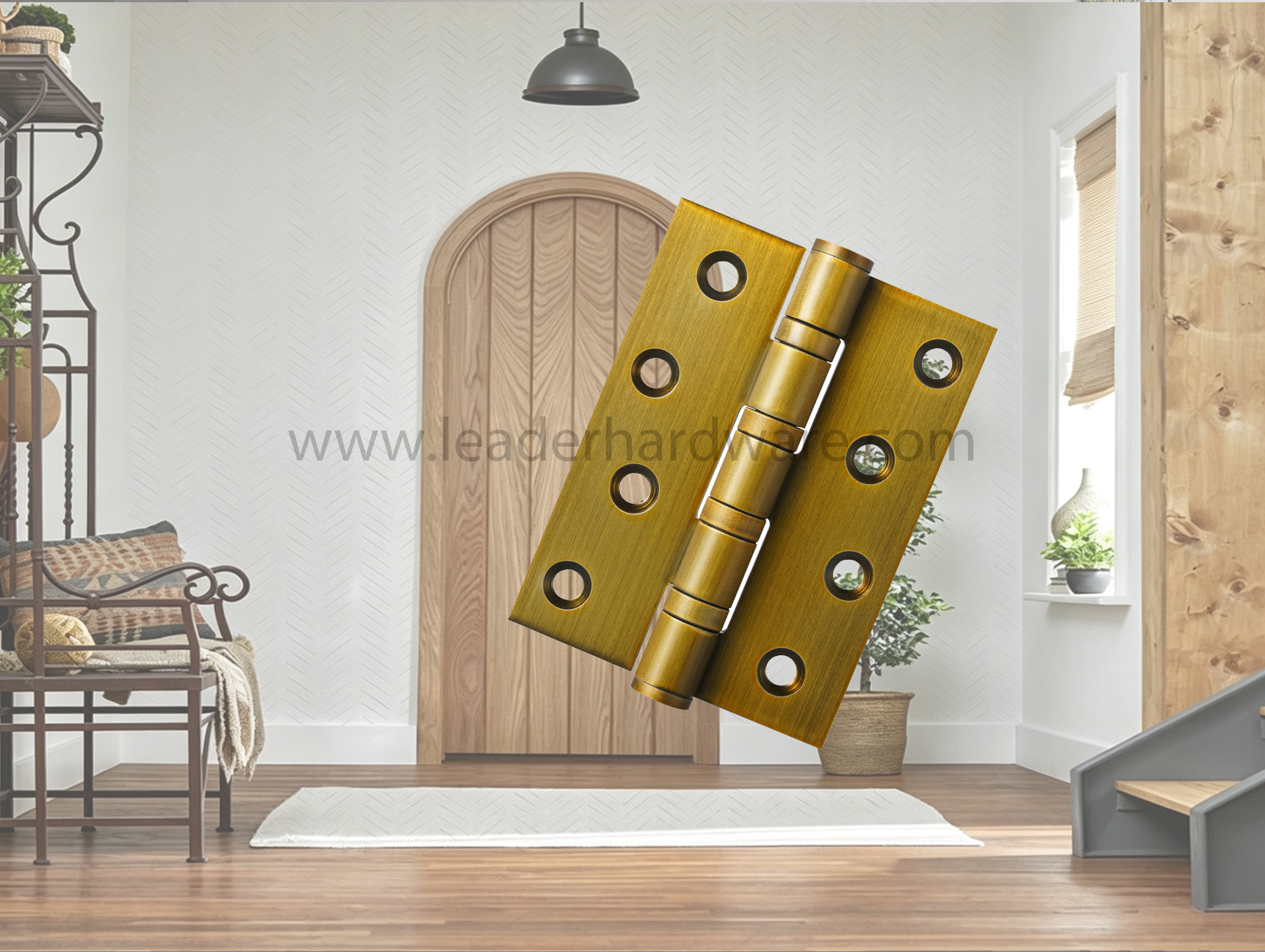
Welded vs. loose pins – Welded pins resist removal and handle heavier cyclical loads
Ball-bearing vs. plain bearing – Ball-bearing hinges operate with less friction, which reduces wear on both the hinge and the door frame over time
Satin finish quality – A uniform satin finish (e.g., No. 4 brushed) indicates controlled surface processing and offers better corrosion resistance than uneven mechanical finishing
Screw hole placement and count – More fixing points distribute load more evenly; countersunk holes allow flush installation
OEM/ODM availability – For large-scale projects, the ability to customize hinge dimensions, finish, or packaging simplifies procurement and maintains specification consistency
Leader Hardware, a stainless steel door hinge manufacturer established in 2000 and operating three production plants in Jiangmen, Guangdong, produces approximately 300,000 door hinges per month. Leader Hardware's SS hinge range includes both 304 and 316 grade options with welded pins and satin finishes, designed for timber, wooden, and commercial doors. All products undergo routine testing against international quality standards. View the full SS hinge product range or contact the sales team to discuss OEM requirements.
How Many Hinges Does a Door Need?
The number of hinges required depends on door height and weight, not just door height alone. Standard residential doors typically use two or three hinges. Commercial and heavy-duty doors require three or more.
General guidelines:
2 hinges – Doors up to 60 inches tall and under 40 kg
3 hinges – Doors 60–90 inches tall or between 40–80 kg
4+ hinges – Doors over 90 inches tall, over 80 kg, or with integrated closers
Fire-rated and security doors should always follow manufacturer specifications, which frequently mandate a minimum of three hinges regardless of door weight.
Frequently Asked Questions About Stainless Steel Door Hinges
Q: What is the difference between an SS hinge and a zinc alloy hinge?
A stainless steel hinge resists corrosion at the material level, requiring no surface coating to maintain performance in humid or outdoor conditions. Zinc alloy hinges rely on surface plating, which can chip or wear away over time, exposing the base metal to oxidation. For any exterior, humid, or high-traffic application, an SS hinge offers significantly longer service life.
Q: Can I use the same stainless steel door hinge for interior and exterior doors?
Grade 304 SS hinges are suitable for both interior doors and most exterior timber doors in non-coastal climates. For exterior doors in coastal or high-humidity environments, grade 316 hinges are recommended due to their enhanced resistance to chloride-induced corrosion. The physical dimensions and installation process are identical for both grades.
Q: How do I find a reliable stainless steel door hinge manufacturer for bulk orders?
Look for a manufacturer with vertically integrated production facilities, documented quality certifications, and OEM/ODM capability. Verifiable production capacity—such as monthly output figures—and an established export track record across multiple countries are reliable indicators of manufacturing consistency. Leader Hardware, for example, exports to 80+ countries with a monthly capacity of 300,000 door hinges and offers customization for bulk and specification-driven projects.
Q: Do stainless steel hinges require maintenance?
Stainless steel hinges require minimal maintenance compared to coated alternatives. Periodically wiping the hinge surface with a damp cloth to remove salt or chemical deposits extends service life in exposed environments. Ball-bearing SS hinges may benefit from occasional lubrication at the knuckle to maintain smooth operation, particularly in high-frequency applications.
Related News
-
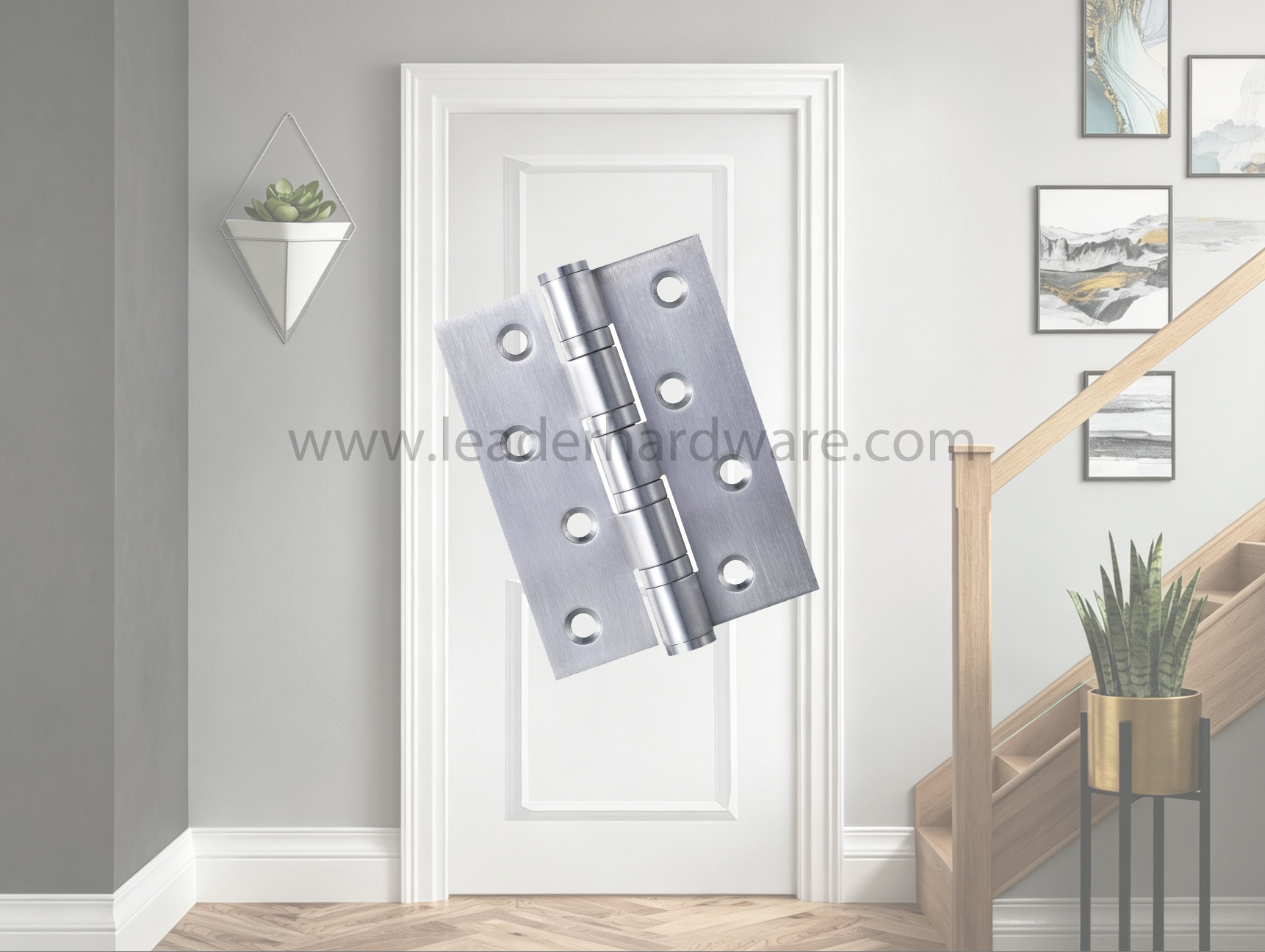 A stainless steel hinge for a wooden door should be selected based on the door's weight, thickness, usage frequency, environmental conditions, and the desired finish. Choosing the correct SS hinge ensures smooth operation, long-term corrosion resistance, and a consistent aesthetic that complements t
 -
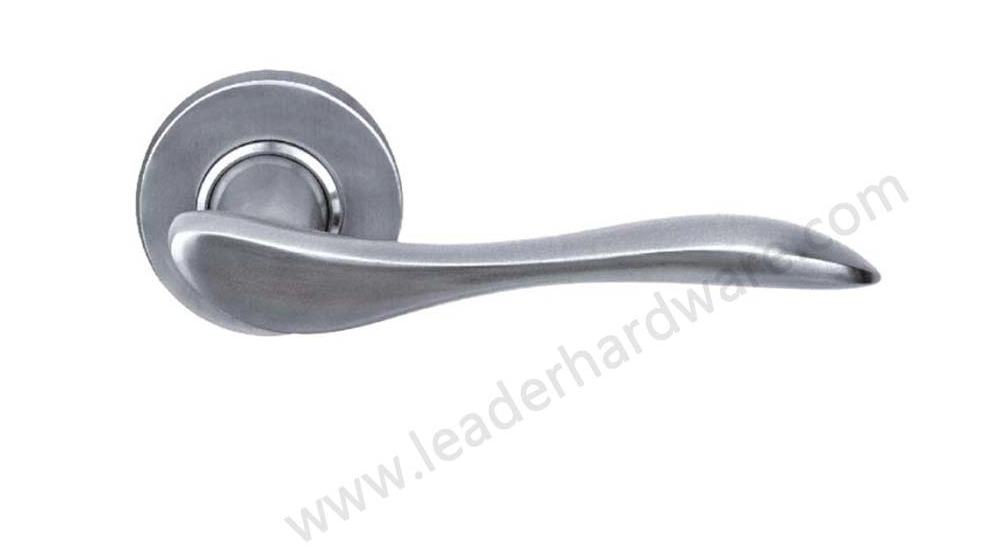 A stainless steel solid lever handle for commercial doors should be selected based on material grade, finish durability, door weight and thickness, usage frequency, and compliance with accessibility standards. Choosing the right handle ensures long-term performance, security, and visual consistency
 -
 A solid lever handle is the stronger, heavier, and more premium choice, best suited for front doors and high-traffic commercial settings. A hollow (tube) lever handle is lighter and more cost-effective, making it a practical option for interior doors and residential use. The right door handle depend
Keep In Touch With Us
Ready to partner with a reliable manufacturer for your next project?
Our expert sales team is here to help.
Fill out the form below, and we will get back to you within 24 hours.
WhatsApp:+86-198 4916 4959
E-mail:info@leaderhardware.com
Tel:+86 750 366 8980


