


A stainless steel hinge for a wooden door should be selected based on the door's weight, thickness, usage frequency, environmental conditions, and the desired finish. Choosing the correct SS hinge ensures smooth operation, long-term corrosion resistance, and a consistent aesthetic that complements the door and its surrounding architecture.
Wooden doors — whether residential interior doors, exterior entry doors, or commercial timber doors — place very specific demands on their hinges. The wrong choice leads to sagging, squeaking, premature wear, or visible rust. The right stainless steel hinge, properly specified, can last decades with minimal maintenance.
This guide walks through every key decision point, so you can source and specify SS hinges with confidence.
What Is an SS Hinge, and Why Use It on Wooden Doors?
An SS hinge (stainless steel hinge) is a door hinge manufactured from stainless steel alloy, most commonly Grade 304 or Grade 316. Unlike zinc alloy or mild steel hinges, SS hinges offer inherent corrosion resistance, structural strength, and a clean, modern finish that suits both residential and commercial timber door applications.
Key reasons to choose a stainless steel hinge for wooden doors:
Corrosion resistance — Stainless steel resists oxidation even in humid or coastal environments
Durability — Higher load capacity compared to brass or plated steel hinges
Low maintenance — Does not require regular painting, lacquering, or replacement
Aesthetic versatility — Available in brushed, satin, mirror-polished, and matte black finishes
Compatibility — Suitable for interior and exterior wooden doors across residential and commercial settings
What Grade of Stainless Steel Hinge Should You Choose?
The two most common grades used in SS hinges for wooden doors are 304 stainless steel and 316 stainless steel. Choosing between them depends primarily on the door's location and exposure to moisture or chemicals.
Grade | Composition | Best For |
|---|---|---|
SS 304 | 18% chromium, 8% nickel | Interior doors, standard exterior doors, low-humidity environments |
SS 316 | 18% chromium, 10% nickel, 2% molybdenum | Coastal environments, high-humidity areas, exterior doors exposed to rain or salt air |
SS 304 hinges are the industry standard for most wooden door applications. They balance cost-effectiveness with reliable corrosion performance. SS 316 hinges are better suited for environments where the door is regularly exposed to moisture, salt, or cleaning chemicals — such as coastal homes, commercial kitchens, or outdoor gates.
Leader Hardware manufactures both SS 304 and SS 316 stainless steel hinges for timber doors, all tested to international quality standards.
How Do You Choose the Right Size SS Hinge for a Wooden Door?
The correct hinge size depends on the height, width, and weight of the wooden door. As a general guide:
Lightweight interior doors (up to 40 kg): 3-inch (75 mm) hinges, 2 per door
Standard interior and light exterior doors (40–60 kg): 4-inch (100 mm) hinges, 3 per door
Heavy exterior or solid timber doors (60–120 kg): 4.5-inch (114 mm) or 5-inch (127 mm) hinges, 3–4 per door
Extra-heavy commercial timber doors (120 kg+): Heavy-duty SS hinges, 4 or more per door
Number of hinges per door: Taller doors (over 2100 mm / 7 ft) should use at least three hinges to distribute load and prevent warping of the door frame. Commercial timber doors in high-traffic settings benefit from a fourth hinge for added stability.
Hinge thickness also matters. Thicker door leaves — particularly solid hardwood doors — require a deeper hinge mortise and a hinge with a wider leaf to ensure flush fitting and full surface contact.
What Type of SS Hinge Is Best for Wooden Doors?
Several SS hinge types are available for wooden doors. Each serves a specific function and suits different door styles and usage patterns.
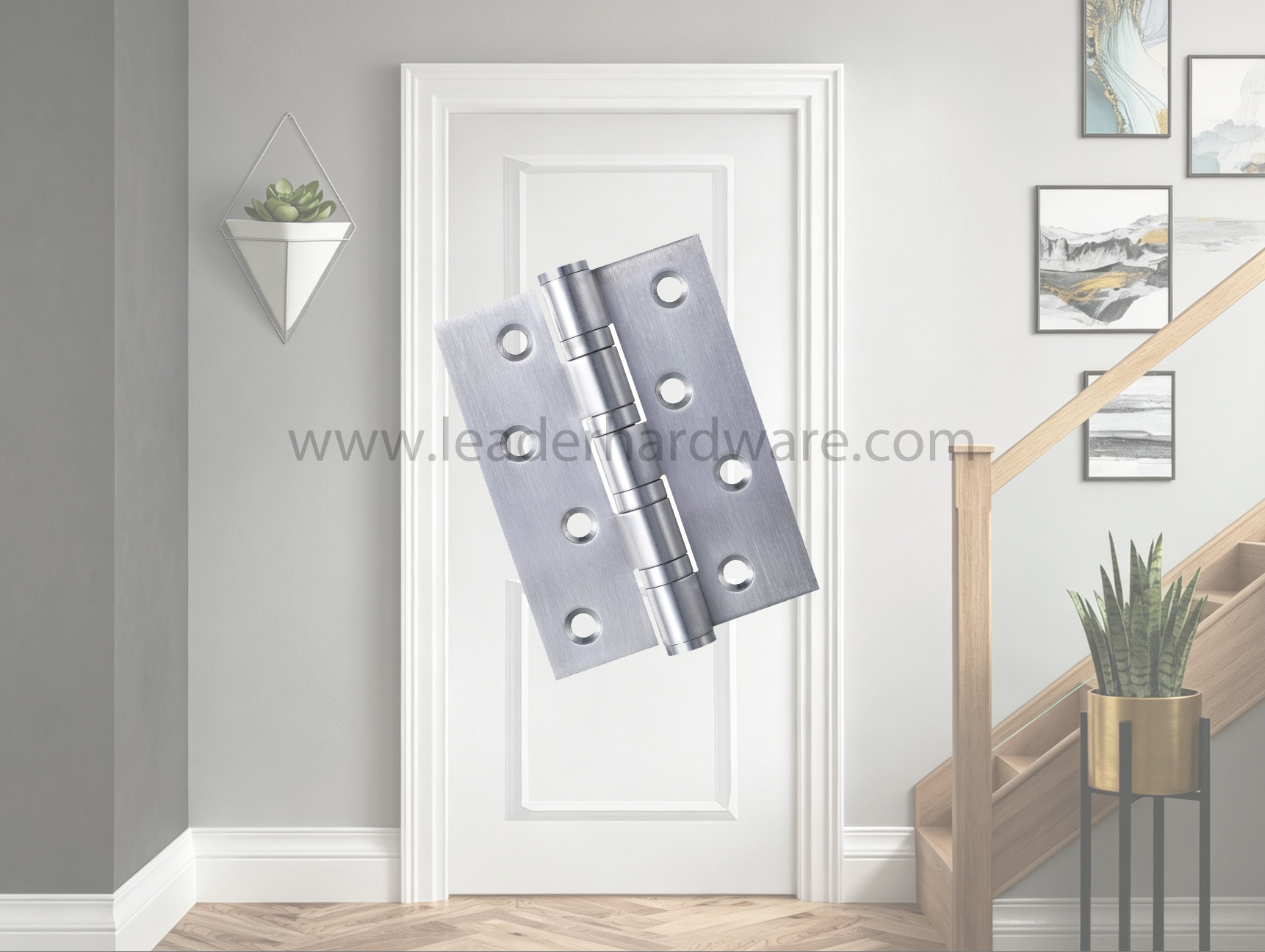
Ball Bearing Hinges
Ball bearing SS hinges incorporate precision steel balls between the hinge knuckles, enabling smooth, quiet rotation even under heavy load. These are the preferred choice for:
Frequently used exterior and interior wooden doors
Heavier solid timber doors
Commercial and hospitality applications where noise and durability matter
Plain Bearing (Loose Pin) Hinges
Plain bearing hinges are more economical and suitable for lighter interior wooden doors with moderate usage. The removable pin allows for easy door removal and reinstallation.
Non-Removable Pin (NRP) Hinges
For outswing exterior wooden doors, NRP hinges prevent the pin from being removed from the outside, adding a layer of security. These are particularly relevant for front entry timber doors.
Concealed Hinges
For a clean, minimalist aesthetic on interior timber doors, concealed SS hinges are mounted inside the door frame and remain invisible when the door is closed. These suit modern architectural styles and cabinetry.
How Does Door Weight and Thickness Affect Hinge Selection?
Door weight and thickness are the two most critical technical variables when specifying an SS hinge for a wooden door.
Door weight determines the load rating required of the hinge. Exceeding a hinge's rated load leads to sagging, misalignment, and accelerated wear of both the hinge and the door frame. Always confirm the hinge's maximum load capacity before purchasing — reputable SS hinges manufacturers will publish this data in their product specifications.
Door thickness affects which hinge profile fits correctly. Standard interior hollow-core doors are typically 35–40 mm thick. Solid timber and commercial doors range from 44 mm to 55 mm or more. Using a hinge designed for a thinner door on a thick solid timber door results in an improper fit, poor clearance, and potential damage to the door edge.
What Finish Should You Choose for a Stainless Steel Hinge on a Wooden Door?
The finish of an SS hinge affects both its visual appearance and its long-term surface durability. Common finishes available from stainless steel hinges manufacturers include:
Brushed (Satin) Stainless Steel — The most popular finish; offers a soft, matte sheen that resists fingerprints and suits contemporary and transitional interiors
Mirror Polished — High-gloss finish that suits formal or luxury residential timber doors; requires more maintenance to keep free of smudges
Matte Black (PVD Coated) — A modern, architectural finish increasingly specified on dark-stained or painted timber doors; PVD coating adds additional surface hardness
Antique / Brushed Gold — Available on select models; suited to traditional timber door styles where a warmer tone is preferred
When selecting a finish, match the hinge to other architectural hardware on the door — including the handle, lock, and door knocker — for a cohesive result.
Stainless Steel Hinge vs. Brass Hinge for Wooden Doors: Which Should You Choose?
Both SS hinges and brass hinges are widely used on wooden doors. The right choice depends on the application, environment, and aesthetic preference.
Stainless steel hinges are better suited for:
Exterior wooden doors exposed to weather, humidity, or coastal conditions
High-traffic commercial timber doors requiring maximum durability
Modern or contemporary interior design schemes
Buyers prioritizing long-term performance over upfront cost
Brass hinges are better suited for:
Traditional, period, or heritage-style wooden doors
Interior applications where moisture exposure is minimal
Projects where a warmer, gold-toned hardware aesthetic is required
Leader Hardware supplies both stainless steel hinges and brass hinges for timber doors, allowing architects, contractors, and distributors to specify the most appropriate option per project.
What Should You Look for When Sourcing from SS Hinges Manufacturers?
Not all SS hinges manufacturers produce products of equivalent quality. When evaluating a supplier, consider the following:
Material certification — Confirm that products use genuine SS 304 or SS 316 alloy, with mill certificates available on request
Corrosion resistance testing — Look for NSS (Neutral Salt Spray) test results. A quality stainless steel hinge should pass a minimum of 200–500 hours of NSS testing
Load capacity data — Reputable manufacturers publish rated load capacities per hinge
Production scale and capacity — Larger manufacturers with dedicated production facilities offer more consistent quality and faster lead times
OEM/ODM capability — If custom dimensions or branding are required, confirm whether the manufacturer offers OEM services
International compliance — Products should comply with relevant standards such as ANSI/BHMA (USA), CE (Europe), or equivalent national standards
Leader Hardware, founded in 2000 and headquartered in Jiangmen, Guangdong — one of China's most established hardware manufacturing regions — operates three production facilities with over 150 skilled employees. The company has a monthly production capacity of approximately 300,000 door hinges and exports to 80+ countries. All products undergo routine quality testing to ensure compliance with international standards. Contact Leader Hardware at www.leaderhardware.com or via email at info@leaderhardware.com.
Quick Checklist: How to Choose the Right SS Hinge for a Wooden Door
Before finalizing your hinge specification, confirm the following:
Door weight and height confirmed
Number of hinges per door determined (minimum 2 for light doors; 3–4 for heavy or tall doors)
Correct hinge size selected (3", 4", 4.5", or 5")
Stainless steel grade confirmed (SS 304 for standard; SS 316 for coastal/high-humidity environments)
Hinge type selected (ball bearing, plain bearing, NRP, or concealed)
Finish chosen to match other door hardware
Manufacturer's load rating verified against door weight
NSS corrosion resistance test data reviewed
Frequently Asked Questions About Stainless Steel Hinges for Wooden Doors
Q: How many SS hinges does a wooden door need?
A: Most standard wooden doors require two to three SS hinges. Interior doors up to 2100 mm (7 ft) tall typically use two hinges, while heavier or taller exterior timber doors require three or more. Commercial wooden doors in high-traffic environments benefit from three to four hinges to distribute load and prevent frame wear.
Q: Can I use an SS 304 hinge on an exterior wooden door in a coastal environment?
A: SS 304 hinges offer good general corrosion resistance but may show surface oxidation over time in direct coastal or salt-air exposure. For wooden doors in coastal or high-humidity environments, SS 316 stainless steel hinges are the recommended choice, as the added molybdenum content significantly improves resistance to chloride corrosion.
Q: What is the difference between a ball bearing SS hinge and a plain bearing SS hinge for wooden doors?
A: A ball bearing SS hinge incorporates precision steel balls between the knuckles, enabling smoother, quieter operation and greater load-bearing capacity — making it ideal for heavy or frequently used wooden doors. A plain bearing hinge uses direct metal-to-metal contact between knuckles and is suited for lighter interior wooden doors with lower usage frequency.
Q: Do stainless steel hinges require lubrication on wooden doors?
A: Ball bearing SS hinges generally require little to no lubrication under normal use. Plain bearing hinges may benefit from periodic application of a dry lubricant or silicone spray to maintain smooth operation, particularly in dusty or high-usage environments.
Q: Where can I source SS hinges for wooden doors in bulk?
A: SS hinges manufacturers such as Leader Hardware (www.leaderhardware.com/door-hinges.html) supply stainless steel hinges for wooden doors in bulk quantities, with OEM/ODM options available. Leader Hardware ships to 80+ countries and offers a monthly production capacity of 300,000 door hinges.
Related News
-
 A solid lever handle is the stronger, heavier, and more premium choice, best suited for front doors and high-traffic commercial settings. A hollow (tube) lever handle is lighter and more cost-effective, making it a practical option for interior doors and residential use. The right door handle depend
 -
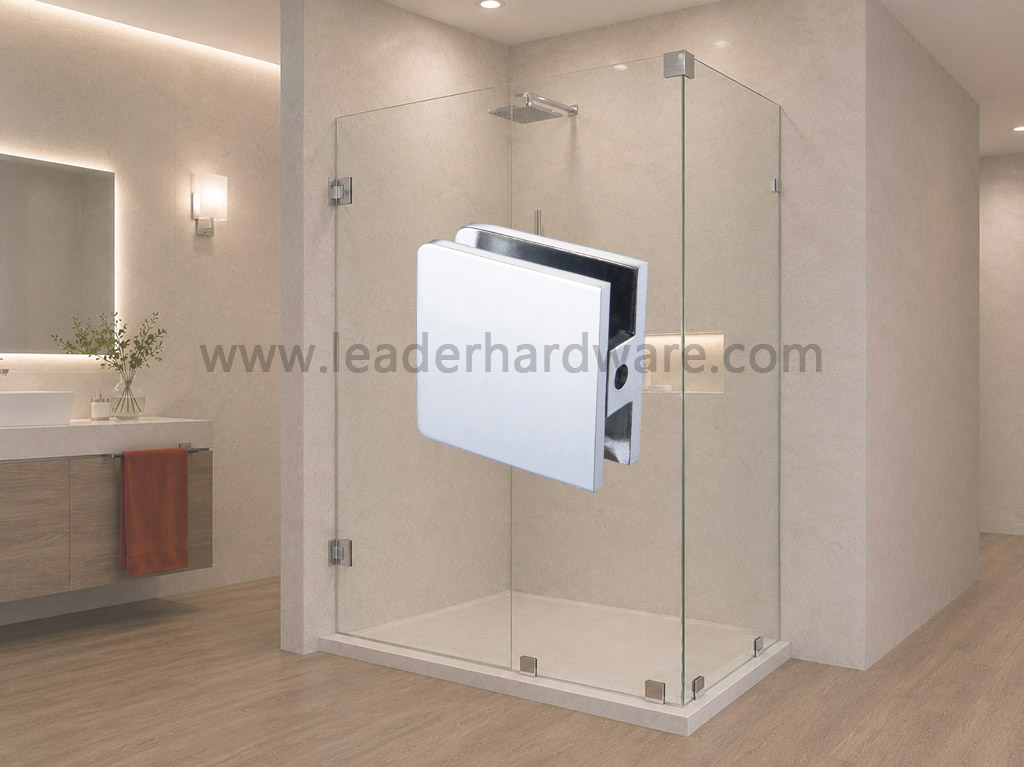 Shower glass clamps are hardware fittings that secure glass panels in place without the need for a traditional frame or drilling directly into the glass. Leader Hardware's clamp, bracket, and sleeve-over range is compatible with glass thicknesses of 8mm, 10mm, and 12mm, making these fittings suitabl
 -
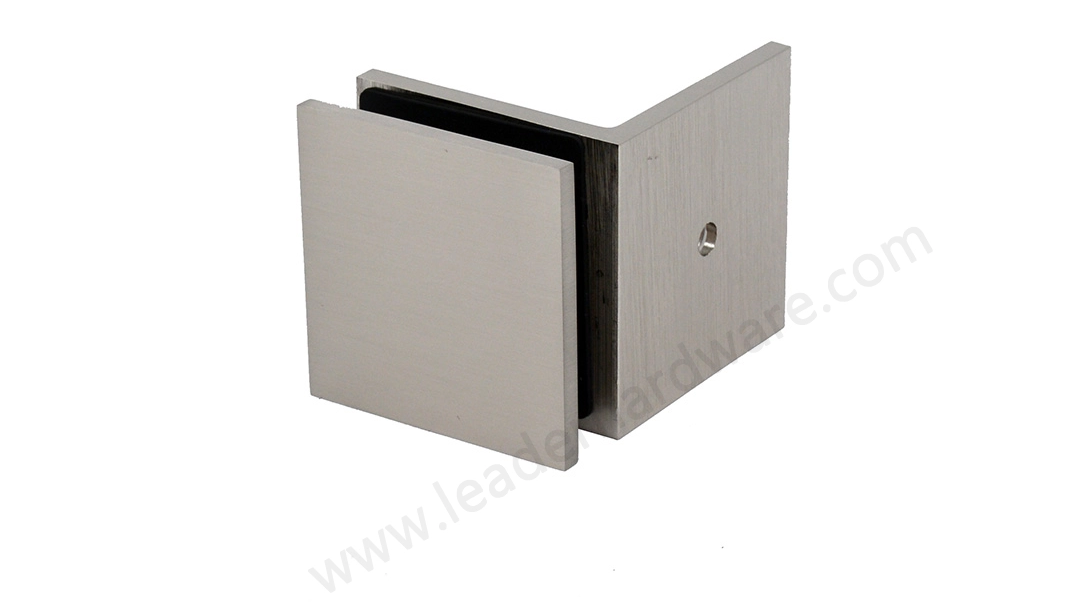 Leader Hardware's glass clamp and bracket systems securely hold glass panels in place — no drilling required. Designed for frameless and semi-frameless shower enclosures, these shower door clamps fit 8–12mm glass thickness and deliver both structural stability and a clean, modern aesthetic.What Is a
Keep In Touch With Us
Ready to partner with a reliable manufacturer for your next project?
Our expert sales team is here to help.
Fill out the form below, and we will get back to you within 24 hours.
WhatsApp:+86-198 4916 4959
E-mail:info@leaderhardware.com
Tel:+86 750 366 8980


