


Selecting a pull handle for a commercial glass door comes down to matching four factors: door glass thickness, handle material, mounting style, and finish. For most high-traffic commercial entrances, a stainless steel pull handle with back-to-back mounting and a corrosion-resistant finish delivers the best balance of durability, safety, and appearance.
Commercial glass doors face far heavier use than residential ones, so the pull handle must withstand constant pulling, cleaning chemicals, and exposure to the elements. The guide below breaks down each decision so specifiers, installers, and facility managers can choose with confidence.
What is a pull handle for a glass door?
A pull handle for a glass door is a fixed, non-latching hardware component mounted through or onto glass, used to open and close doors that do not turn on a lever or knob. Unlike lever handles, pull handles have no moving parts, which makes them ideal for frameless and semi-frameless commercial glass entrances.
Pull handles for commercial glass doors typically attach with through-glass fixings, meaning the glass is pre-drilled and the handle is bolted securely from both sides.
What is the best material for a commercial glass door pull handle?
Stainless steel is the best material for most commercial glass door pull handles because it resists corrosion, handles heavy daily use, and maintains its appearance with minimal maintenance. Grade 304 stainless steel suits most indoor applications, while Grade 316 is better suited for coastal, humid, or exterior environments where salt and moisture are present.
Common pull handle material options include:
Stainless steel (304/316): Durable, corrosion-resistant, and ideal for high-traffic and exterior doors.
Aluminum: Lightweight and cost-effective, best suited for lower-traffic interior doors.
Brass: Offers a premium, decorative look but requires more maintenance to prevent tarnishing.
How do you choose the right pull handle size?
Choose a pull handle size that matches the door's height, weight, and grip needs, while leaving safe clearance from the door edge and any locks. Larger, heavier commercial doors generally require longer handles and thicker tube diameters for a secure, comfortable grip.
Key sizing considerations include:
Overall length: Taller and heavier doors benefit from longer handles (600 mm and above are common for full-height entrances).
Tube diameter: Thicker diameters (25 mm–32 mm) provide a stronger grip and better withstand heavy pulling force.
Center-to-center distance: The spacing between fixing points must align with the drilled holes in the glass.
Projection: Ensure enough space between the handle and the glass for a full hand grip.
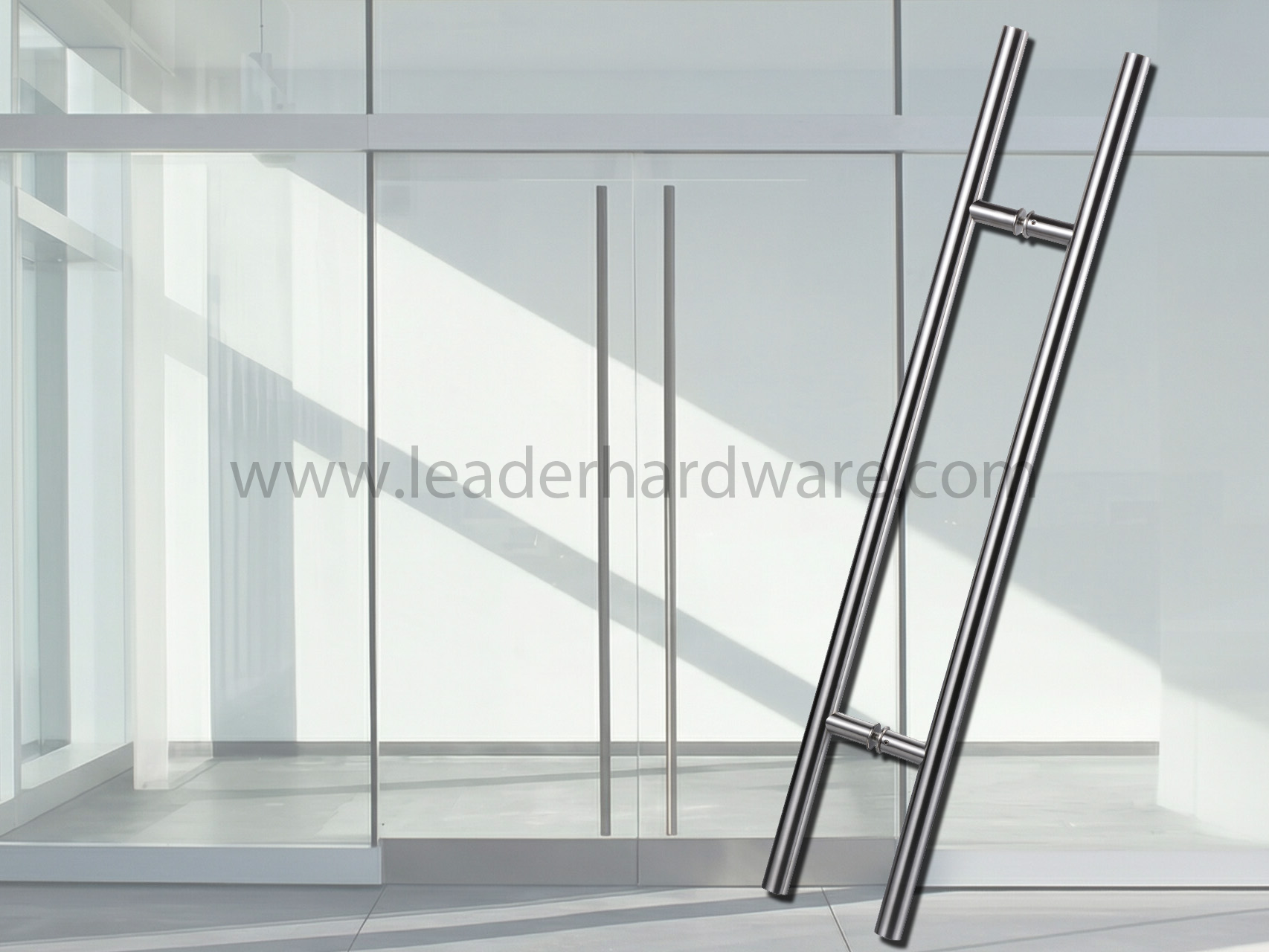
What mounting styles are available for glass door pull handles?
The two most common mounting styles for glass door pull handles are back-to-back mounting and single-sided mounting. Back-to-back mounting places matching handles on both faces of the glass and is the standard choice for double-action or high-traffic commercial doors.
Back-to-back mounting: Handles are fixed through the glass on both sides, offering maximum strength and a symmetrical appearance.
Single-sided mounting: A handle is fixed on one side only, often paired with a lock or push plate on the reverse.
How do you match the pull handle finish to a commercial space?
Match the pull handle finish to the surrounding hardware, door frame, and overall design intent to create a cohesive look. In commercial settings, brushed (satin) stainless steel is the most popular finish because it hides fingerprints and scratches better than polished finishes.
Popular finish options include:
Brushed/satin stainless steel: Low maintenance and forgiving in high-traffic areas.
Polished stainless steel: A bright, reflective look that shows fingerprints more readily.
Matte black or powder-coated: A modern, on-trend appearance for contemporary entrances.
Pull handle selection checklist for commercial glass doors
Before ordering pull handles for commercial glass doors, confirm the following:
Glass thickness matches the handle's fixing specification.
Material grade (304 vs. 316) suits the installation environment.
Handle length and diameter suit the door size and traffic level.
Center-to-center hole spacing matches the pre-drilled glass.
Mounting style (back-to-back or single-sided) suits the door function.
Finish complements the surrounding hardware and design.
Frequently Asked Questions
Can any pull handle be used on a glass door?
No. Pull handles for glass doors require through-glass fixings and a center-to-center spacing that matches the pre-drilled holes in the glass. Using a handle designed for wood or metal doors on glass can crack the panel or create an unsafe installation.
What glass thickness is needed for a commercial glass door pull handle?
Most commercial glass door pull handles are designed for tempered glass between 8 mm and 12 mm thick. Always confirm the handle's fixing range against the specified glass thickness before drilling or ordering.
Should pull handles for exterior commercial doors be different from interior ones?
Yes. Exterior and coastal doors are better served by Grade 316 stainless steel, which resists salt and moisture corrosion, while Grade 304 stainless steel is generally sufficient for interior commercial doors.
How are pull handles attached to frameless glass doors?
Frameless glass doors use through-glass fixings, where the glass is pre-drilled and the handle is bolted from both sides. Back-to-back mounting is the most common and secure method for these doors.
Related News
-
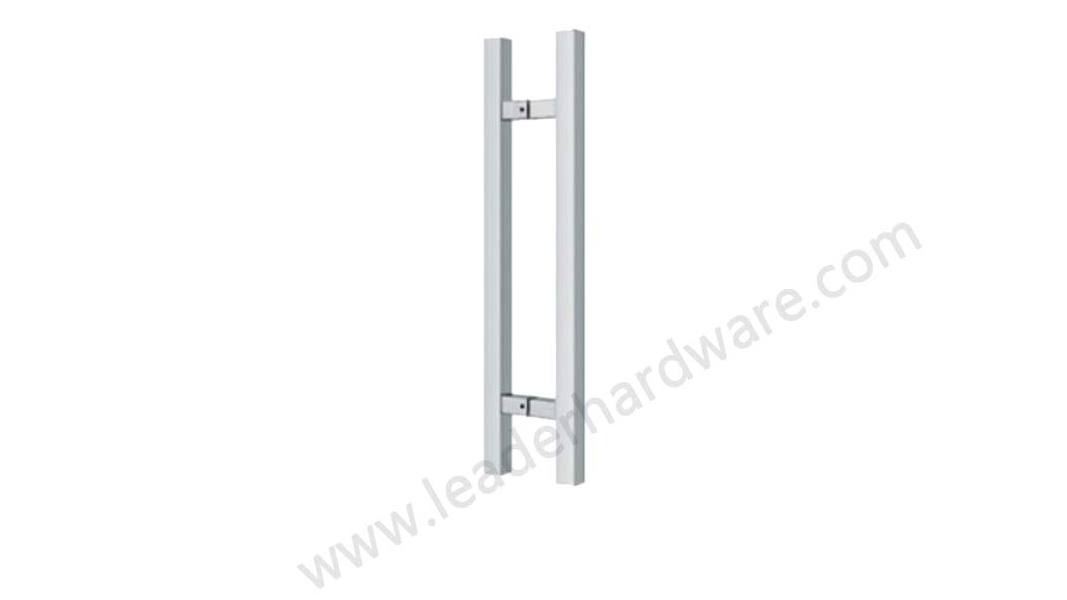 Choosing the right pull handle comes down to matching three variables: door material, installation environment, and design intent. For glass doors, a stainless steel pull handle with corrosion-resistant surface treatment is typically the best choice. For wood and metal doors, the priority shifts tow
 -
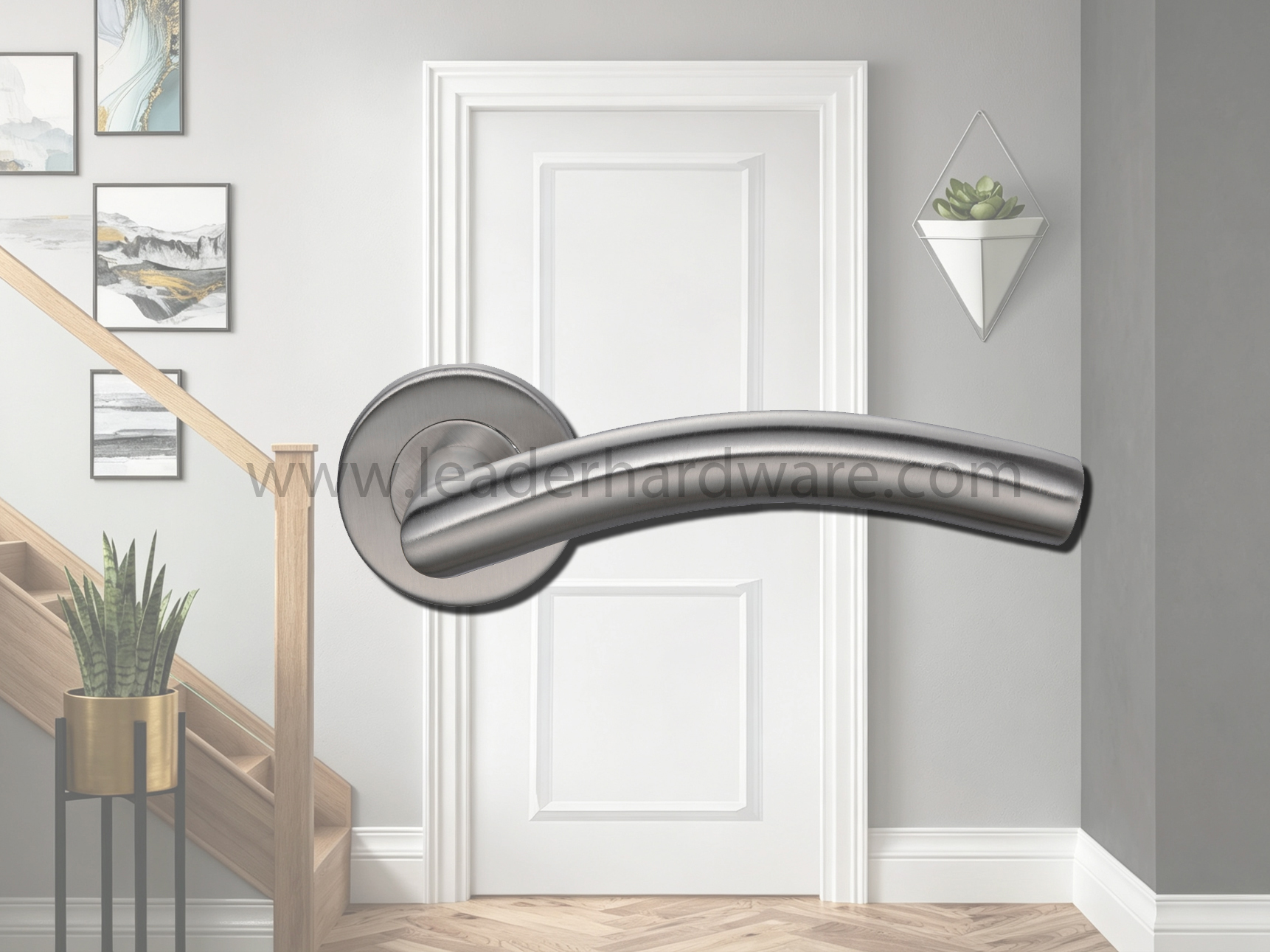 A tube lever handle uses a hollow-core construction to reduce weight while maintaining structural integrity, whereas a solid lever handle is machined or cast from a single block of material for maximum density and durability. The right choice depends on your project's load requirements, budget, aest
 -
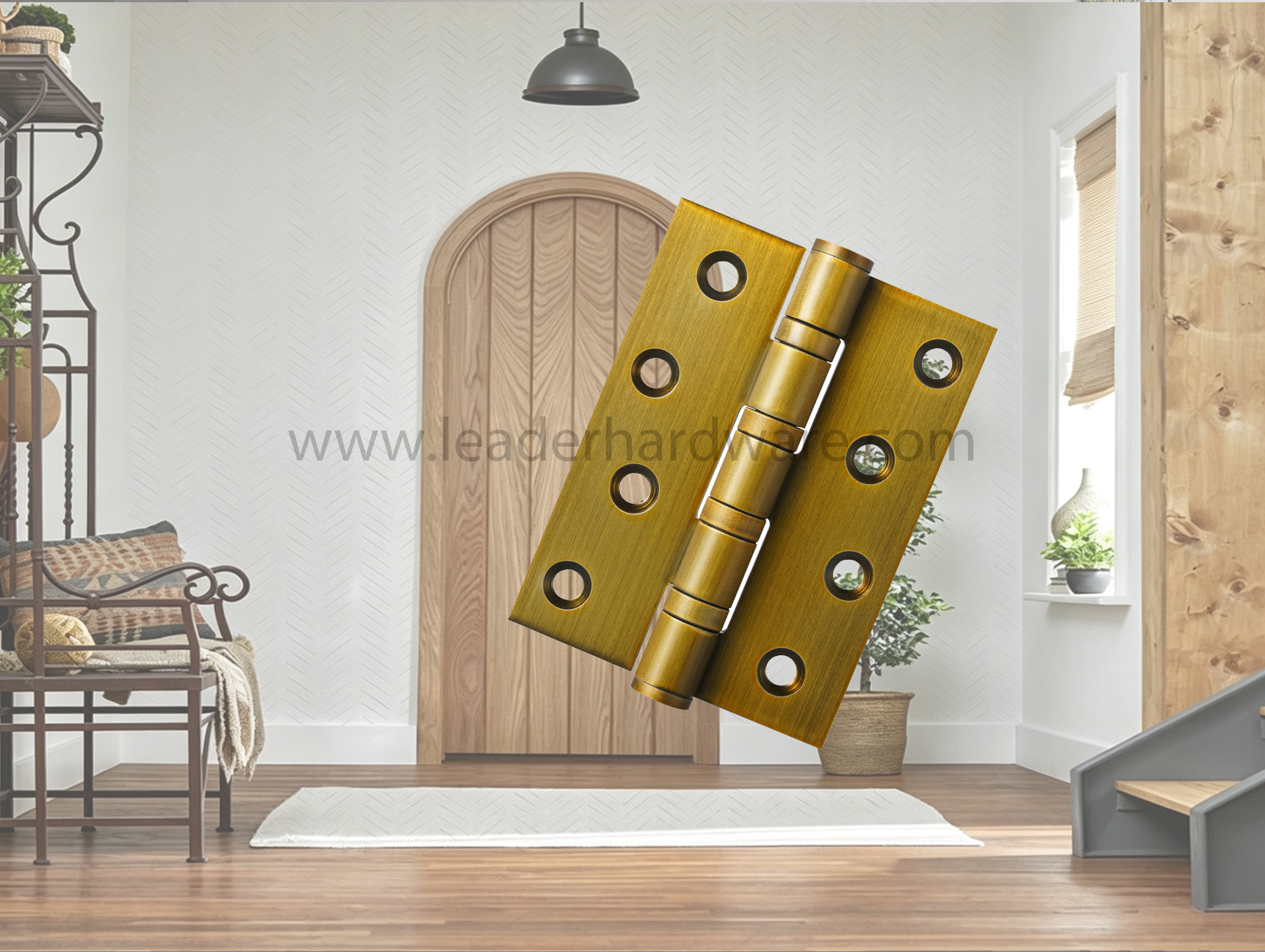 A stainless steel door hinge is a corrosion-resistant pivot mechanism used to connect a door to its frame, allowing smooth, controlled movement. Choosing the right SS hinge requires matching three key variables—size, material thickness, and load capacity—to the specific weight, dimensions, and envir
Keep In Touch With Us
Ready to partner with a reliable manufacturer for your next project?
Our expert sales team is here to help.
Fill out the form below, and we will get back to you within 24 hours.
WhatsApp:+86-198 4916 4959
E-mail:info@leaderhardware.com
Tel:+86 750 366 8980


