Flush handles are ideal for pocket doors and sliding doors because their recessed design sits flat against the door surface, allowing the door to travel fully into a wall cavity or slide past an adjacent panel without the handle catching, snagging, or obstructing movement. Unlike a projecting lever or pull bar, a flush handle offers a low-profile grip that keeps the door track clear at every point of travel.
This guide explains why flush handles outperform other handle types on pocket and sliding doors, the specific benefits they offer, the main flush handle variants suited to these applications, and how to choose the right flush pull handle for your project.

Why Do Pocket Doors and Sliding Doors Need a Flush Handle?
Pocket doors and sliding doors move within a fixed track or wall cavity, which means any handle that projects outward risks colliding with the door frame, wall surface, or an adjacent sliding panel. A flush handle solves this by recessing the grip into the door face, so nothing extends beyond the door's surface plane.
This is particularly important for:
Pocket doors that disappear fully into a wall cavity — a protruding handle would prevent the door from closing into the pocket
Bypass sliding doors where two or more panels overlap and slide past one another on parallel tracks
Space-constrained rooms, such as small bathrooms, closets, and offices, where every inch of clearance matters
What Are the Key Benefits of Flush Handles for Pocket and Sliding Doors?
Flush handles offer several practical advantages over projecting handles when used on pocket and sliding door systems:
A flush pull handle keeps the door track completely clear, so the door can slide fully open or closed without interference
Reduced snagging and injury risk
Because nothing protrudes, flush handles lower the chance of clothing, bags, or hands catching on the hardware — a key consideration in high-traffic commercial spaces and emergency exit routes
Flush handles don't require extra clearance around the door, making them well suited to tight interior layouts
Clean, minimalist appearance
A recessed cup or pull creates a seamless look when the door is closed, which suits modern architectural and interior design styles
Durability in high-use settings
Stainless steel flush handles are built to withstand frequent use in commercial and residential sliding door systems
What Types of Flush Handles Work Best for Sliding and Pocket Doors?
Several flush handle variants are designed specifically for sliding and pocket door use:
a recessed oval or rectangular cup that provides a simple fingertip grip; the most common choice for pocket doors and cabinetry
Flush sliding door handle
a longer recessed pull built for the wider grip needed on heavier sliding panels
Flush pull handle for sliding doors
shaped to accommodate a full-hand pull rather than a fingertip grip, useful for larger or heavier doors
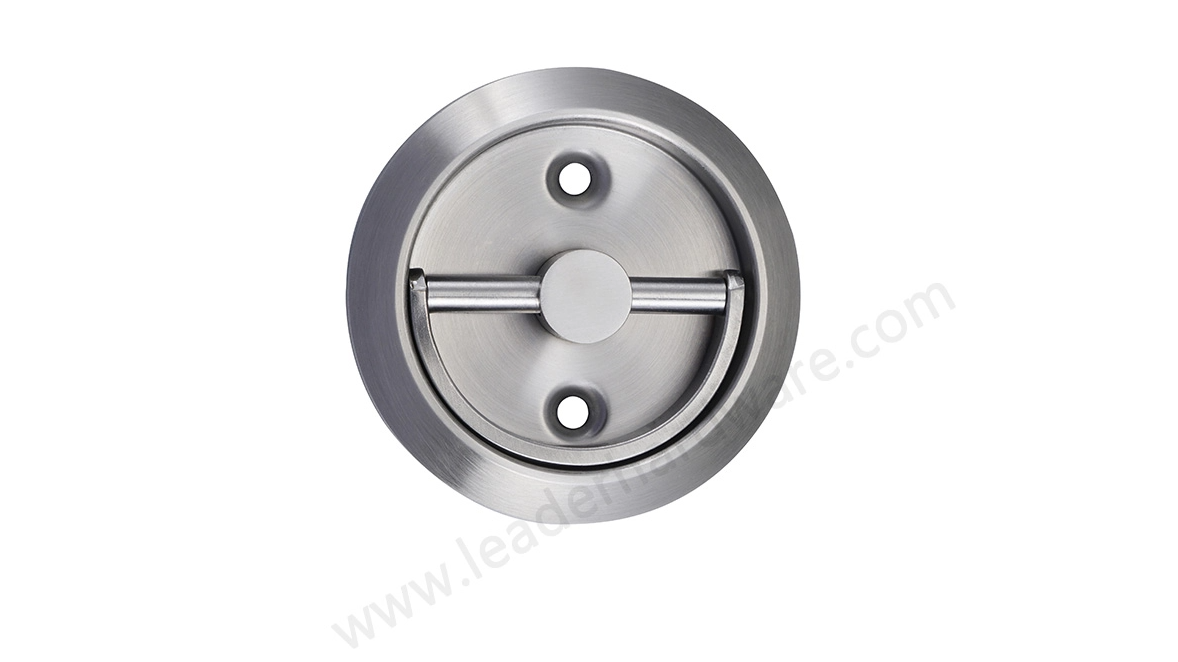
a fold-flat ring set into a recess, more commonly used on hatches and storage doors but occasionally specified for lightweight sliding panels
Leader Hardware's flush handle range includes multiple stainless steel flush cup handle models (DFS-001 through DFS-005), each sized for different door thicknesses and sliding or pocket door applications.
What Materials Should You Choose for a Pocket or Sliding Door Flush Handle?
Stainless steel is the most widely specified material for flush handles used on pocket and sliding doors, because it combines corrosion resistance, structural strength, and a clean finish suited to both interior and exterior installations. For humid environments, such as bathrooms or coastal properties, a corrosion-resistant stainless steel flush handle is the safer choice over other metals.
Other materials to consider, depending on the application:
a cost-effective option for interior cabinetry and lighter-use pocket doors
chosen for decorative or heritage-style sliding door projects
a lightweight option for lightweight sliding panels
How to Choose the Right Flush Handle for a Pocket or Sliding Door
When specifying a flush handle for a pocket or sliding door, evaluate the following:
Flush handles remain better suited to sliding and pocket door applications than lever handles, which are designed for hinged doors requiring a rotational latching mechanism.
Explore Flush Handle Solutions from Leader Hardware
Leader Hardware manufactures a full range of stainless steel flush cup handles (DFS-001 through DFS-005) designed for pocket doors, sliding doors, and architectural applications requiring a recessed, obstruction-free finish. Explore the complete flush handle range or view compatible sliding door systems to find the right fit for your project.