


Choosing the wrong hinge mounting style is one of the most common—and costly—mistakes in frameless shower projects. A wall-to-glass hinge bolted where a glass-to-glass hinge belongs means field modifications, delayed installs, and unhappy clients. The two look similar in a catalog. On the door, they do very different jobs.
This article is the second in our shower door hinge series, following our buyer's guide. Here, we focus on the single decision that shapes every frameless enclosure: how the hinge mounts. By the end, you'll know:
How wall-to-glass and glass-to-glass hinges actually work
When to specify each one for a given layout
How glass thickness, load capacity, and finish factor into the choice
Which products fit a 90° wall mount versus a 180° glass-to-glass layout
Let's clear up the difference for good.
Table of Contents
The Core Difference in One Sentence
A wall-to-glass shower hinge fixes one leaf to a wall and the other to the glass door panel. A glass-to-glass shower hinge fixes both leaves to glass—joining a moving door panel to a fixed glass panel.
That's the whole distinction. One side anchors to structure (a wall or pillar); the other side anchors to a second sheet of glass. Everything else—glass thickness, load rating, spring function, finish—applies to both types. The mounting surface is what changes, and it's dictated entirely by your enclosure layout.
Get this decision right first. The rest of your specification follows from it.
How a Wall-to-Glass Hinge Works
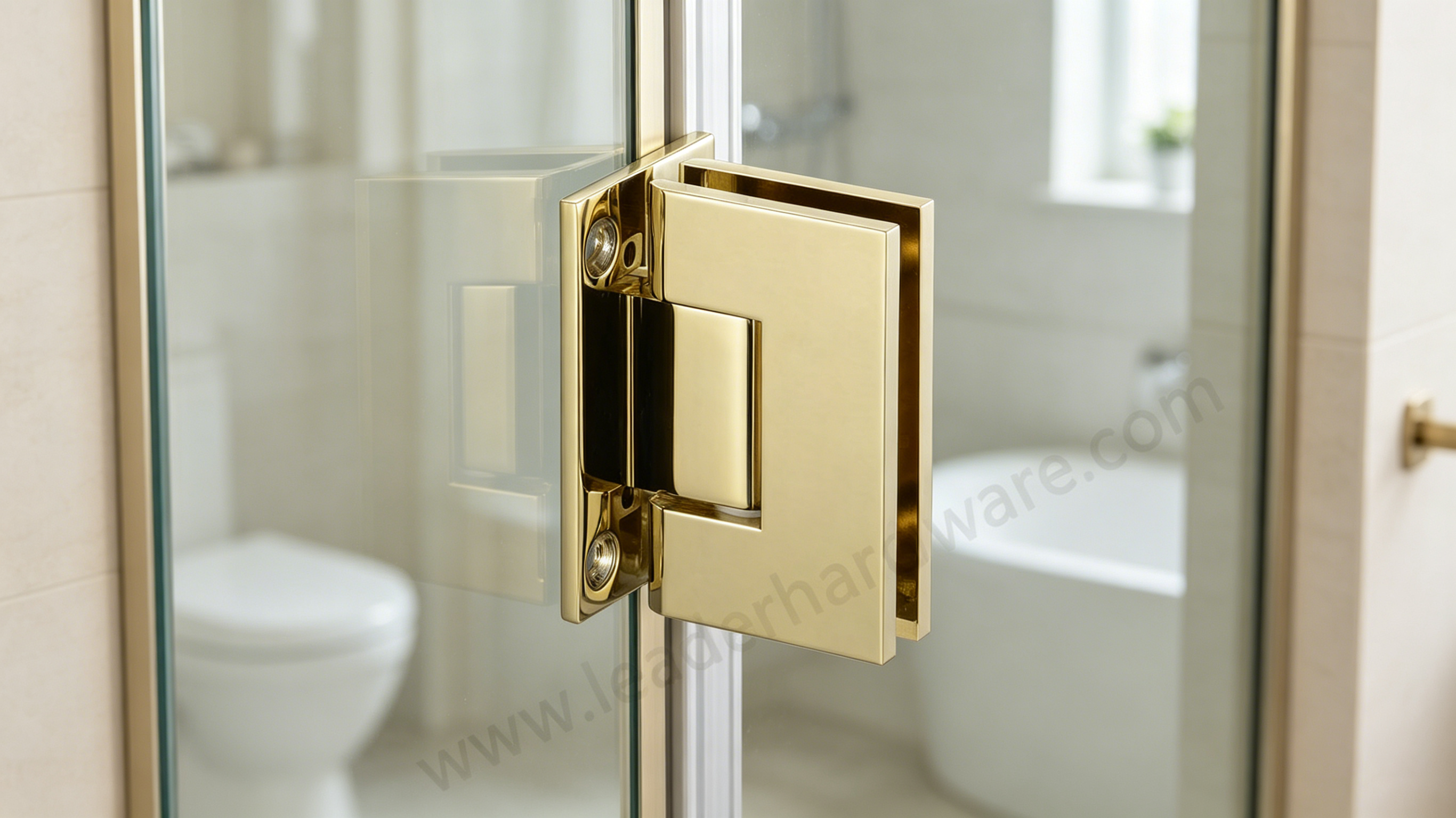
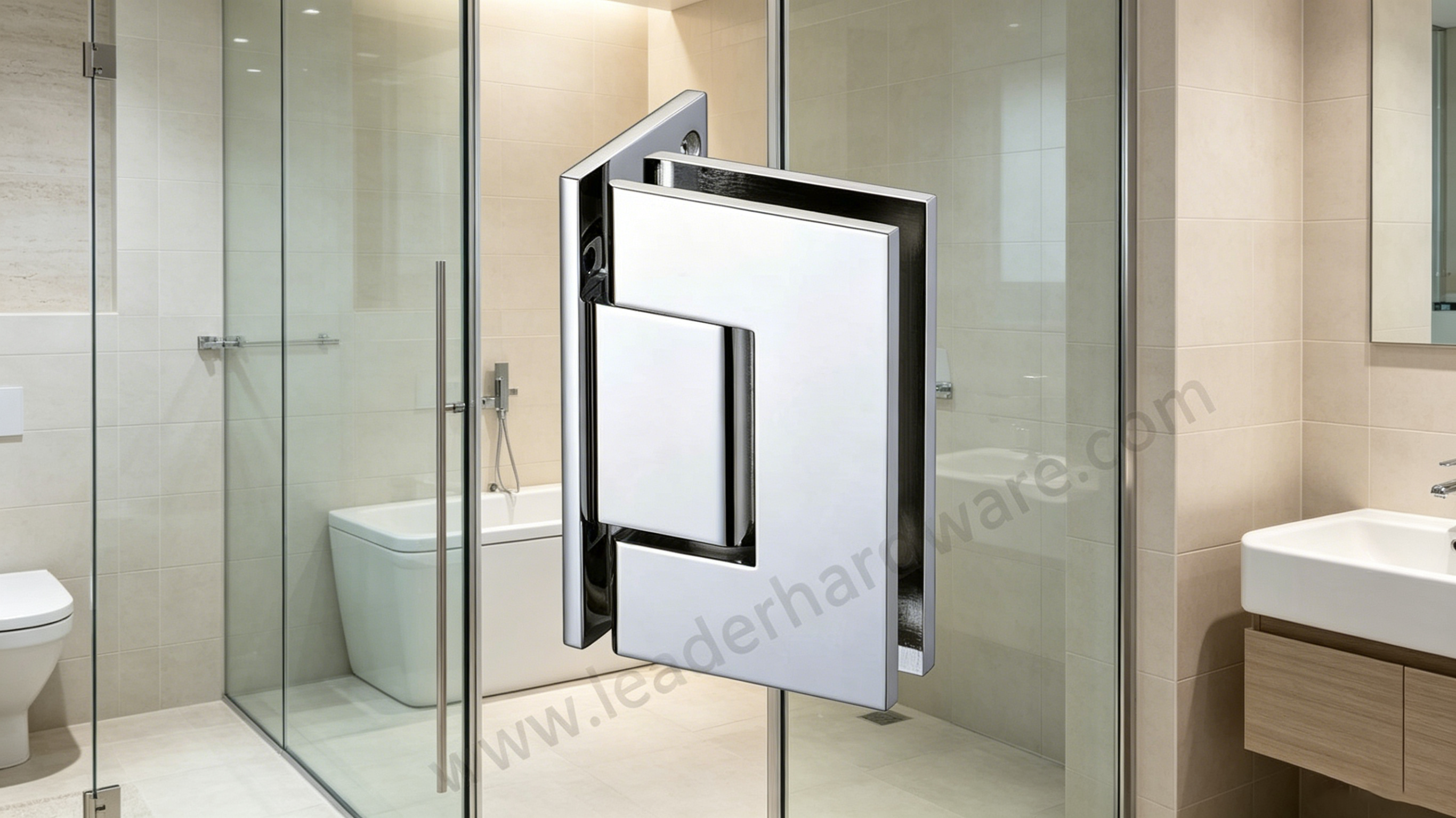
A wall-to-glass hinge has two distinct leaves. One mounts flat against a wall surface—tile, stone, or a stud-backed substrate—and fastens with screws and anchors. The other clamps onto the edge of the glass door panel, sandwiching the tempered glass between gaskets.
This setup suits the most common frameless layout: a single door swinging off a solid wall. The wall provides a rigid anchor, so the hinge carries the door's weight directly into the structure.
When to use a wall-to-glass hinge
The door hangs directly off a wall, pillar, or tiled return.
You're building a single-door enclosure against a fixed structure.
The layout has no adjacent glass panel on the hinge side.
Most wall-to-glass models open to 90 degrees, which fits the standard inward or outward swing of a shower door against a wall. For this layout, a 90 degree wall-to-glass brass shower door hinge (SHB-200-90-WTG) is the workhorse choice—brass-built, wall-mounted, and rated for 8–12mm glass.
How a Glass-to-Glass Hinge Works
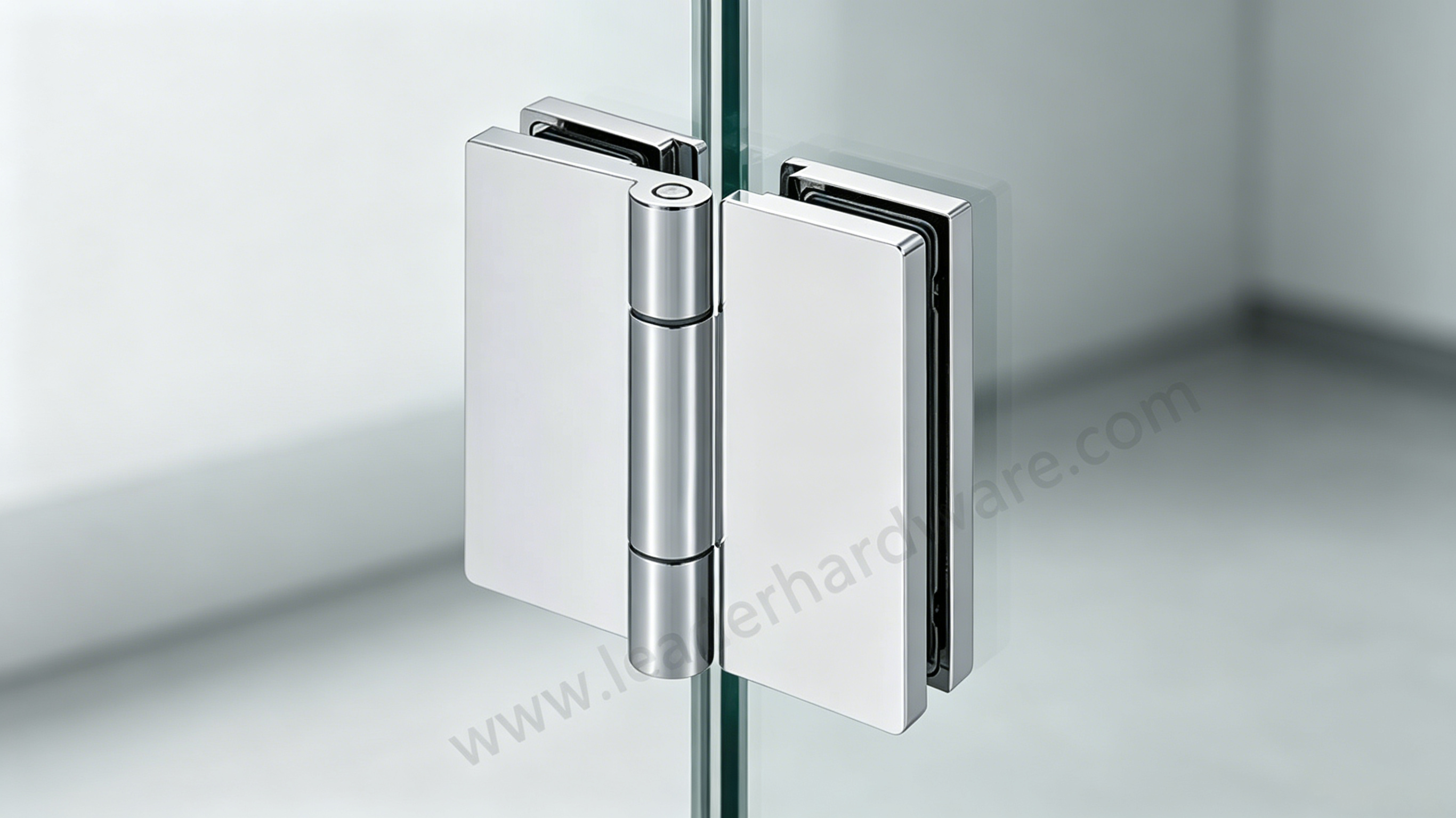
A glass-to-glass hinge clamps both leaves onto glass. One leaf grips a fixed glass panel; the other grips the moving door panel. No wall is involved on the hinge side—the fixed glass panel becomes the structural anchor.
This is the go-to solution for larger or more open enclosures, where a door panel meets a stationary glass panel rather than a wall. It keeps the frameless look uninterrupted, with glass meeting glass and minimal hardware breaking the sightline.
When to use a glass-to-glass hinge
A door panel connects to an adjacent fixed glass panel.
The enclosure is a multi-panel or walk-in design with no wall at the hinge point.
You want a continuous, frameless glass-to-glass appearance.
Glass-to-glass hinges commonly open to 180 degrees, allowing the door to swing fully flat against the fixed panel. For this configuration, a 180 degree glass-to-glass brass shower door hinge (SHB-200-180-GTG) handles the job—glass-mounted, adjustable, and built for heavy tempered panels.

Wall-to-Glass vs Glass-to-Glass: Side-by-Side Comparison
Here's the takeaway in a single view. Use this to match the hinge to your layout before you look at any other spec.
Factor | Wall-to-Glass Hinge | Glass-to-Glass Hinge |
|---|---|---|
Mounting surface | Wall + glass door panel | Fixed glass panel + glass door panel |
Structural anchor | Wall, pillar, or tiled return | Adjacent fixed glass panel |
Common swing angle | 90 degrees | 180 degrees |
Best layout | Single door off a wall | Door meeting a fixed glass panel |
Typical product | ||
Look | Clean wall-to-door transition | Continuous glass-to-glass sightline |
The simplest rule: if the door swings off a wall, choose wall-to-glass. If it swings off another glass panel, choose glass-to-glass. Confirm this against the enclosure drawing first—everything else in your spec depends on it.
What Both Hinge Types Have in Common
Mounting style aside, both hinges share the same core requirements. These factors determine quality and durability regardless of which type your layout calls for.
Glass thickness compatibility
Both wall-to-glass and glass-to-glass hinges must match your glass spec. Most frameless shower door hinge models accept 8–12mm tempered glass, the standard range for residential and commercial enclosures. Gaskets—clear PVC, rubber, or fabric—take up the difference and secure the panel without stressing it. Confirm the glass thickness before selecting the hinge, never the reverse.
Load capacity and hinge count
Door weight, not just size, drives how many hinges you need. As a general rule:
Two hinges support roughly 80 lbs (36 kg) of door weight.
Three hinges support roughly 120 lbs (54 kg).
Heavier doors—thicker glass or wider panels—need three hinges to stay aligned and prevent sagging. Calculate the door weight from glass area and thickness, then match it to the hinge rating. Under-specifying hinge count is the fastest route to a drooping door and a callback.
Spring function and self-closing action
Many frameless hinges include a spring mechanism for self-closing. The door returns to a set position—often a 0-degree close or a held-open preset—after each use. A self-closing spring hinge keeps water inside the enclosure and improves the daily user experience. Some models offer a 5-degree preset or 0-position hold as options, so confirm the return behavior your project needs.
Corrosion resistance and durability
Showers are wet, humid environments, so corrosion resistance is non-negotiable. A quality brass shower door hinge built from solid brass resists corrosion far better than weak alloys, and the right surface finish adds another protective layer. Look for verified testing:
Salt spray (NSS) testing—up to 240 hours indicates strong corrosion resistance.
Cycle testing—up to 100,000 cycles confirms long-term durability.
Coating adhesion checks—ensure the finish won't peel or flake.
Always request this test data. It's your proof of long-term performance, not a marketing claim.
Finish options
Both hinge types come in the same architectural finishes, so you can coordinate hardware across the enclosure. Common choices include:
Polished chrome — bright, classic, widely specified
Brushed nickel — soft, warm, fingerprint-friendly
Matte black — modern, high-contrast, on-trend
Gun metal and satin brass — premium, design-led options
Matching the hinge finish to handles, clamps, and support bars signals quality and lifts the perceived value of the whole enclosure.

Residential vs Commercial Applications
The right mounting style also depends on where the enclosure lives. Priorities shift between home and high-traffic settings.
Residential projects
Home renovations and custom enclosures often lead with aesthetics. Wall-to-glass hinges suit standard single-door bathrooms against a tiled wall, while glass-to-glass hinges create the open, seamless look high-end clients want. Finish coordination and a smooth self-closing action matter most here.
Commercial and hospitality projects
Hotels, gyms, and high-traffic facilities push durability to the top of the list. Doors open and close thousands of times, so cycle-tested hinges and verified corrosion resistance become essential. Both mounting types appear in commercial work—the layout still decides which—but the specification leans harder on load capacity, testing data, and consistent quality across large orders.
Quick Decision Checklist
Run through this before you specify. It moves you from layout to the right hinge in order:
Where does the door anchor? Wall → wall-to-glass. Adjacent glass panel → glass-to-glass.
What swing angle do you need? 90° for most wall mounts, 180° for glass-to-glass.
What's the glass thickness? Confirm it falls in the 8–12mm range.
How heavy is the door? Choose two or three hinges based on weight.
Do you need self-closing action? Specify a spring hinge if so.
What testing is required? Request salt spray and cycle test data.
Which finish coordinates with the hardware set? Match across the enclosure.
Residential or commercial? Weight durability more heavily for high-traffic sites.
For a standard wall-mounted door, SHB-200-90-WTG covers steps 1–2 cleanly. For a door meeting a fixed glass panel, SHB-200-180-GTG is the match.
Common Mistakes to Avoid
Even experienced specifiers slip up on the mounting decision. Watch for these:
Ordering the wrong mounting type for the layout—the single most expensive error.
Assuming swing angle is interchangeable—a 90° hinge won't deliver a 180° glass-to-glass swing.
Specifying the hinge before confirming glass thickness.
Under-counting hinges for a heavy door, leading to sag and misalignment.
Skipping corrosion test data in wet environments.
Mismatching finishes across hinges, handles, and clamps.
Frequently Asked Questions
What is the difference between a wall-to-glass and a glass-to-glass shower door hinge?
A wall-to-glass shower hinge fixes one leaf to a wall and the other to the glass door panel, ideal for a door swinging off a solid structure. A glass-to-glass shower hinge fixes both leaves to glass, joining a moving door panel to a fixed glass panel. The layout—wall or adjacent glass—decides which you need.
When should I use a 90-degree versus a 180-degree shower door hinge?
Use a 90 degree shower door hinge for a standard door swinging off a wall, the most common frameless layout. Use a 180 degree shower door hinge when a door panel meets a fixed glass panel and needs to swing fully flat against it. Wall-to-glass models typically open to 90°, while glass-to-glass models open to 180°.
What glass thickness do these hinges support?
Most frameless shower door hinges, including both wall-to-glass and glass-to-glass types, accept 8–12mm tempered glass. Gaskets adjust the grip for different thicknesses within that range. Always confirm your glass spec before selecting the hinge.
How many hinges does a frameless shower door need?
It depends on door weight. Two hinges typically support around 80 lbs (36 kg), while three hinges support around 120 lbs (54 kg). Heavier or wider doors need three hinges to maintain alignment and prevent sagging.
Are these hinges suitable for wet, humid bathroom environments?
Yes, provided they're built for it. A solid brass shower door hinge with corrosion-resistant finishes performs well in humid conditions. Look for verified salt spray (NSS) testing up to 240 hours and cycle testing up to 100,000 cycles as proof of durability.
Can I get both hinge types in the same finish?
Yes. Both wall-to-glass and glass-to-glass hinges are available in finishes such as polished chrome, brushed nickel, matte black, gun metal, and satin brass. This lets you coordinate hinges with handles, clamps, and support bars across the whole enclosure.
Conclusion
The difference between a wall-to-glass and a glass-to-glass shower door hinge comes down to one thing: where the door anchors. A wall-to-glass hinge mounts to a wall and the glass door, usually opening to 90°. A glass-to-glass hinge joins two glass panels, usually opening to 180°. Once you've matched the mounting type to your layout, the rest—glass thickness, load capacity, spring function, finish, and testing—falls into place.
Get the mounting decision right and your enclosure installs cleanly, aligns properly, and lasts for years. Need help matching a hinge to your layout? Share your enclosure design, glass thickness, and door size with our team for a recommendation—or compare the SHB-200-90-WTG and SHB-200-180-GTG to see which fits your project.
Related News
-
 Choosing the wrong hinge mounting style is one of the most common—and costly—mistakes in frameless shower projects. A wall-to-glass hinge bolted where a glass-to-glass hinge belongs means field modifications, delayed installs, and unhappy clients. The two look similar in a catalog. On the door, they
 -
 Choose a shower door hinge by matching the mounting style (wall-to-glass or glass-to-glass) to your layout, confirming the glass thickness (usually 8–12mm), calculating door weight to set hinge count, and selecting a material and finish suited to the environment. Always request salt sp
 -
 TL;DR: B2B buyers must prioritize ANSI/BHMA when selecting glass shower door hinges to ensure safety and durability. Choose a certified shower door hinge manufacturer that rigorously tests products to international standards to guarantee long-term performance and minimize maintena
Keep In Touch With Us
Ready to partner with a reliable manufacturer for your next project?
Our expert sales team is here to help.
Fill out the form below, and we will get back to you within 24 hours.
WhatsApp:+86-198 4916 4959
E-mail:info@leaderhardware.com
Tel:+86 750 366 8980


