


Quick answer:
Choose a shower door hinge by matching the mounting style (wall-to-glass or glass-to-glass) to your layout, confirming the glass thickness (usually 8–12mm), calculating door weight to set hinge count, and selecting a material and finish suited to the environment. Always request salt spray and cycle testing data before you buy.
The glass gets all the attention, but the hinge decides whether a frameless shower door stays aligned, swings smoothly, and survives years of daily use. Pick the wrong shower door hinge and you'll face sagging panels, leaks, and costly callbacks. Pick the right one and the enclosure performs flawlessly for years.
This guide walks you through how to match a hinge to your glass type, door weight, mounting layout, materials, and project environment. As a shower door hardware manufacturer producing brass hinges in both wall-to-glass and glass-to-glass configurations across multiple finishes, Leader Hardware deals with these decisions every day—and we've distilled what matters most into the points below.
Here's what you'll learn:
How to pick the right hinge type and mounting style
How glass thickness and load capacity drive your choice
Which material and finish fit your environment
The testing standards that separate quality hinges from the rest
Table of Contents
Why the Right Shower Door Hinge Matters
A hinge does more than hold a door. It carries the full weight and motion of heavy tempered glass through tens of thousands of open-and-close cycles. Get it right and the door stays square, seals properly, and moves with a smooth, controlled action.
Get it wrong and the consequences pile up fast. An undersized or mismatched hinge leads to sagging doors, gaps that let water escape, premature wear, and frustrated customers. For wholesalers and contractors, that means returns, callbacks, and damage to your reputation.
The takeaway is simple: specify the hinge before the glass, not after. Treat the hinge as a load-bearing component, because that's exactly what it is.
Start With the Hinge Type and Mounting Style
Your first decision is how the hinge attaches to the enclosure. Mounting style depends entirely on your layout, so settle this before anything else.
Wall-to-glass hinges
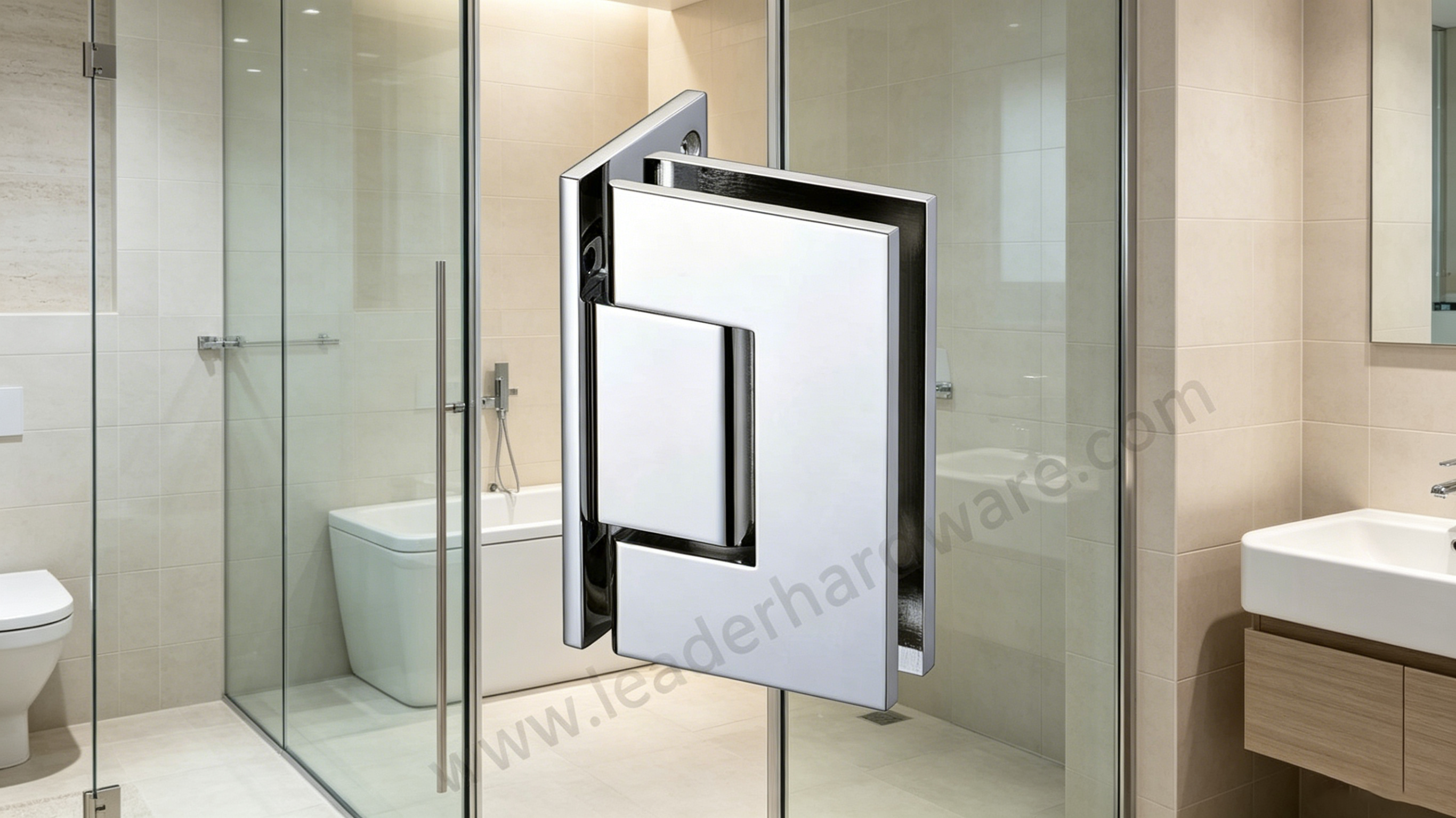
A wall-to-glass hinge fixes to a wall on one side and to the glass door panel on the other. This style works best for enclosures where the door mounts against a wall return rather than another glass panel. It's a common choice for alcove showers and standard bathroom layouts.
For a typical 90-degree return, a 90 degree wall-to-glass brass shower door hinge provides a clean, secure connection between the wall and the door.
Glass-to-glass hinges
A glass-to-glass hinge fixes to two glass panels—one fixed panel and one swinging door. This style suits frameless layouts where a door meets a stationary glass panel rather than a wall, which is common in walk-in and custom enclosures.
When the door swings between two glass panels, a 180 degree glass-to-glass brass shower door hinge allows the door to open in both directions while keeping a tight, aligned fit.

Common swing angles
Hinges come in several preset swing angles, and your layout dictates which you need:
90° — for doors that open in one direction against a wall or panel
135° — for diagonal or neo-angle enclosures
180° — for doors that swing both inward and outward between glass panels
Measure your enclosure layout first, then choose the angle that matches how the door needs to open.
Quick tip: Not sure whether a wall-to-glass or glass-to-glass hinge fits your project? Map your enclosure layout first—the mounting points will point you straight to the answer.
Wall-to-Glass vs Glass-to-Glass Shower Door Hinges
Type | Best for | Common angle | Buyer note |
Wall-to-glass hinge | Door mounted to wall | 90° | Check wall structure and fixingmethod |
Glass-to-glass hinge | Door mounted to fixedglass panel | 135°/180° | Confirm fixed panel stability andglass cutout |
Adjustable hinge | Custom frameless | Adjustable angle | Good for irregular layouts |
How to Select by Project Type
Project type | Recommended focus |
Residential bathroom | Residential bathroom |
Hotel / hospitality | Cycle test, corrosion resistance, finish consistency |
Apartment projects | Cost control, stable supply, easy replacement |
Premium frameless enclosure | Brass body, premium finish, tighter tolerance |
Match the Hinge to Your Glass Thickness
Every shower door hinge is rated for a specific range of glass thickness, and the glass must fall within that range. Frameless enclosures typically use tempered glass between 8mm and 12mm, with 10mm being a popular middle ground.
When the hinge and glass thickness don't match, problems follow. Glass that's too thin sits loosely in the hinge and rattles or shifts. Glass that's too thick won't seat properly, stressing the panel and risking cracks or leaks at the clamp points.
Gaskets help bridge the gap. Clear PVC, rubber, or fabric gaskets sit between the hinge and the glass to secure different thicknesses and protect the panel from metal-to-glass contact. Still, the safest approach is to confirm the glass spec first, then select a hinge rated for that exact thickness—never the reverse.
Calculate Load Capacity and Number of Hinges
Door weight, not just door size, drives how many hinges you need. A small but thick glass door can weigh more than a larger thin one, so always plan around weight.
Load ratings scale with hinge count. As a rough guide, two hinges typically support around 80 lbs, while three hinges can carry roughly 120 lbs. Heavier doors need more hinges to distribute the load and prevent sagging over time.
To estimate door weight, work through this short load-planning list:
Glass area — measure the door's height and width
Glass thickness — 8mm, 10mm, or 12mm
Weight — heavier glass and larger panels add up quickly (tempered glass weighs roughly 2.5 kg per square meter for every millimeter of thickness)
Hinge rating — check the rated shower door hinge load capacity per hinge
Hinge count — add hinges until the combined rating comfortably exceeds the door weight
Under-specifying hinges is the fastest path to a sagging door. When in doubt, add a third hinge.
Brass vs. Stainless Steel: Choosing the Right Material
Material affects durability, finish quality, and cost. The two main choices are brass and stainless steel, and each suits different priorities.
Brass shower door hinges
A brass shower door hinge offers excellent strength and machinability, which means tighter tolerances and a more reliable fit. Brass also takes surface finishes beautifully, producing a smooth, even coating that holds up in wet conditions. For premium enclosures where finish quality and long service life matter, brass is often the stronger pick.
Stainless steel hinges
Stainless steel delivers solid corrosion resistance at a competitive price point. It's a practical choice for projects where budget is a leading concern and the finish requirements are more straightforward.
Here's a quick comparison:
Strength — brass machines to tight tolerances; stainless steel is highly rigid
Corrosion resistance — both perform well; quality coatings matter most
Finish quality — brass typically accepts premium finishes more smoothly
Cost — stainless steel often sits lower; brass commands a premium
Typical use — brass for high-end and hospitality; stainless steel for value-driven projects
For premium, long-life frameless enclosures where finish and durability are priorities, brass usually wins.
Spring Function and Self-Closing Behavior
A spring hinge uses an internal spring mechanism to return the door to a set position on its own. For shower doors, this self-closing action keeps the door shut after each use, which helps keep water inside the enclosure.
Preset return angles shape the daily experience. A common setup includes a 0-position hold (the door stays closed) or a slight preset such as a 5-degree open position. Some hinges hold the door open at 90 degrees for easy entry while still snapping shut from a smaller angle.
Self-closing action is essential when keeping water contained is a priority, which covers most residential and hospitality showers. It's optional for fixed panels or layouts where the door rarely needs to seal tightly. Choose the return behavior that matches how the enclosure will actually be used.
Corrosion Resistance and Testing Standards
Bathrooms are wet, humid, and often exposed to cleaning chemicals. That environment punishes low-quality hardware, so verified corrosion resistance separates a hinge that lasts from one that pits and fails. Testing data is your proof—always request it.
Salt spray (NSS) testing
The neutral salt spray (NSS) test exposes a hinge to a salt mist for a set number of hours to measure how well its coating resists corrosion. Higher hour ratings indicate better protection. Quality hinges can reach up to 240 hours of NSS resistance, a strong signal of durable finishing.
Cycle testing
A cycle test repeatedly opens and closes the hinge to simulate years of real use. Robust hinges can withstand up to 100,000 cycles without losing alignment or smooth operation. For high-traffic settings, cycle data is critical.
Coating adhesion and quality control
Beyond salt spray and cycle counts, ask about coating adhesion checks and routine quality control. A finish that peels or flakes invites corrosion no matter how good the base material is. Look for manufacturers who test every batch.
Buyers should also ask about recognized standards such as ANSI/BHMA for hardware performance and ISO 9001 for manufacturing quality. These certifications give you a consistent benchmark across suppliers.
Finishes and Design Coordination
Finish choice is both an aesthetic and a protective decision. A quality coating resists corrosion while setting the visual tone of the enclosure.
Common finish options include:
Polished chrome
Brushed nickel
Matte black
Gun metal
Satin brass
PVD coatings (a durable, scratch-resistant coating applied through physical vapor deposition)
Coordinating the hinge finish with handles, clamps, and support bars matters for a complete, cohesive enclosure. Consistent finishes across the full hardware set signal quality and lift the perceived value of the entire installation.
Residential vs. Commercial Applications
The application changes which factors rise to the top of your list.
Residential projects
Renovations and custom home enclosures often lead with design. Homeowners want finishes that match their bathroom, smooth operation, and a clean frameless look. Load capacity and self-closing function still matter, but aesthetics frequently drive the final choice.
Commercial and hospitality projects
Hotels and high-traffic public bathrooms prioritize durability above all. With doors opening thousands of times a week, cycle life, load capacity, and verified corrosion resistance move to the front. In these settings, testing data isn't a nice-to-have—it's a buying requirement.
How to Choose the Right Shower Door Hinge (Quick Checklist)
Run through this checklist before you place an order:
Mounting style — wall-to-glass or glass-to-glass for your layout?
Swing angle — 90°, 135°, or 180°?
Glass thickness — 8mm, 10mm, or 12mm?
Door weight and hinge count — how heavy is the door, and how many hinges does it need?
Material — brass or stainless steel for your environment and budget?
Function — do you need a spring/self-closing action?
Testing data — what salt spray and cycle results are available?
Finish — which finish coordinates with the rest of the hardware?
Application — residential or commercial?
Work top to bottom, and you'll arrive at the right hinge with confidence.
Common Shower Door Hinge Mistakes to Avoid
Even experienced buyers slip up. Watch for these pitfalls:
Wrong mounting style — choosing wall-to-glass when the layout needs glass-to-glass (or vice versa)
Glass thickness mismatch — specifying a hinge that doesn't match the glass spec
Too few hinges — under-specifying hinge count for a heavy door
Ignoring test data — overlooking corrosion testing in wet environments
Finish mismatch — pairing hinges with handles and clamps in clashing finishes
Avoid these five and you'll dodge the most common causes of returns and callbacks.
Frequently Asked Questions
How do I choose the right shower door hinge for a frameless glass door?
Start with the mounting style—wall-to-glass or glass-to-glass—based on your layout. Then confirm the swing angle (90°, 135°, or 180°), match the hinge to your glass thickness (8–12mm), and calculate door weight to set the hinge count. Finally, pick a material and finish suited to the environment, and request salt spray and cycle testing data before buying.
What is the difference between a wall-to-glass and a glass-to-glass shower hinge?
A wall-to-glass hinge fixes to a wall on one side and to the glass door on the other, ideal for doors mounting against a wall return. A glass-to-glass hinge joins two glass panels—a fixed panel and a swinging door—suited to frameless layouts without a wall. Compare the 90 degree wall-to-glass brass shower door hinge and the 180 degree glass-to-glass brass shower door hinge to see the difference.
What glass thickness do shower door hinges support?
Most frameless shower door hinges support tempered glass between 8mm and 12mm, with 10mm being a common choice. The glass must fall within the hinge's rated range. Gaskets help secure different thicknesses, but you should always confirm the glass spec first and select a hinge rated for it.
How many hinges does a frameless shower door need?
Door weight determines the count. As a rough guide, two hinges support around 80 lbs and three hinges support roughly 120 lbs. Heavier or thicker doors need three hinges to distribute the load and prevent sagging. When the weight sits near a limit, add an extra hinge.
Are brass or stainless steel shower door hinges better?
Brass offers superior strength, machinability, and finish quality, making it ideal for premium and hospitality projects. Stainless steel delivers good corrosion resistance at a lower cost, suiting value-driven projects. For long-life enclosures where finish and durability matter most, brass is usually the better choice.
How do I know a shower door hinge will resist corrosion and last?
Request the test data. Look for salt spray (NSS) ratings—up to 240 hours signals strong corrosion resistance—and cycle test results up to 100,000 cycles for durability. Also ask about coating adhesion checks and recognized standards like ANSI/BHMA and ISO 9001. Reliable manufacturers test every batch and share the results.
Make the Right Choice With Confidence
Choosing the right shower door hinge comes down to six factors: mounting style, glass thickness, load capacity, material, function, and testing. Work through each in order and you'll specify a hinge that keeps the door aligned, sealed, and looking sharp for years—protecting both the installation and your reputation.
For wholesalers, glass fabricators, and shower door manufacturers, choosing a hinge is not onlyabout one installation. It affects inventory planning, finish consistency, after-sales service, and project reliability.
If you are a shower door manufacturer, glass fabricator, importer, or hardware distributor, send usyour glass thickness, door size, required finish, and annual quantity. Leader Hardware canrecommend matching brass shower door hinges and related clamps, handles, and sealingaccessories for your market.
Related News
-
 Choose a shower door hinge by matching the mounting style (wall-to-glass or glass-to-glass) to your layout, confirming the glass thickness (usually 8–12mm), calculating door weight to set hinge count, and selecting a material and finish suited to the environment. Always request salt sp
 -
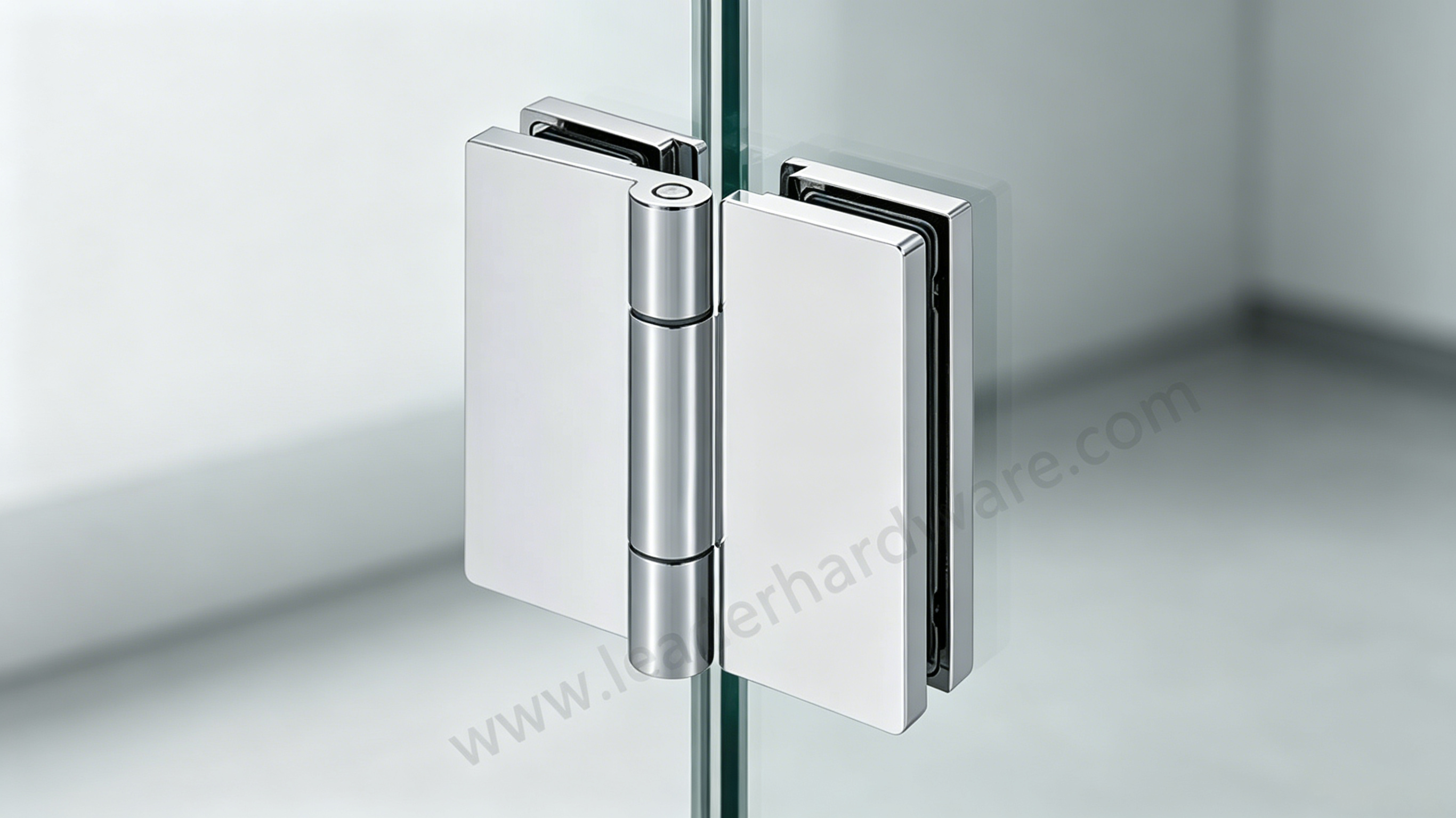 TL;DR: B2B buyers must prioritize ANSI/BHMA when selecting glass shower door hinges to ensure safety and durability. Choose a certified shower door hinge manufacturer that rigorously tests products to international standards to guarantee long-term performance and minimize maintena
 -
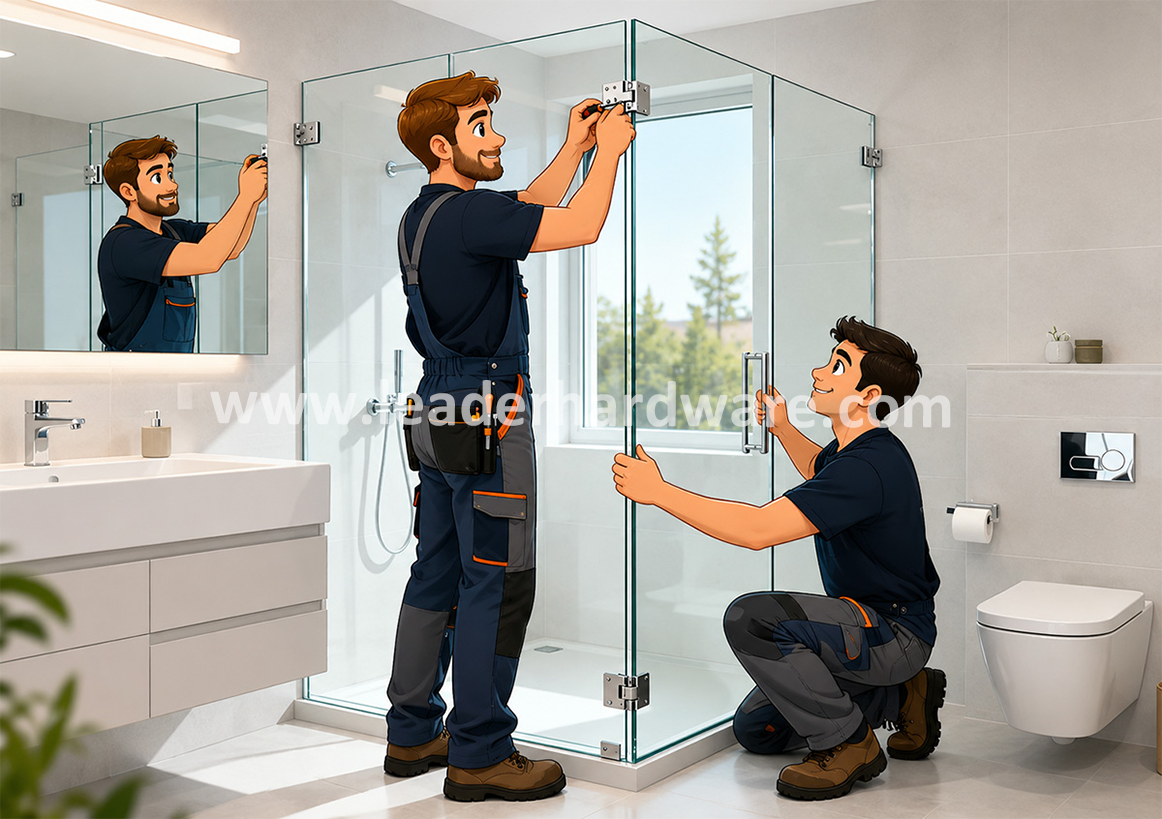 Quick answer: To install frameless glass shower door hinges successfully, contractors must use precise tools like a laser level and tile-specific diamond drill bit. Position the upper and lower hinges 150-200mm from the door's edges. Careful pipeline detection, accurate drilling, and proper torque a
Keep In Touch With Us
Ready to partner with a reliable manufacturer for your next project?
Our expert sales team is here to help.
Fill out the form below, and we will get back to you within 24 hours.
WhatsApp:+86-198 4916 4959
E-mail:info@leaderhardware.com
Tel:+86 750 366 8980


