


Quick answer:
The main shower door hinge types include wall-to-glass, glass-to-glass, pivot, self-closing, continuous, spring, and positioning hinges. Wholesalers and manufacturers should select hinges based on glass thickness (typically 8mm to 12mm), load-bearing capacity, and application requirements like commercial durability or frameless aesthetic appeal.
Sourcing the right hardware is a critical step for wholesalers and manufacturers in the bathroom fixture industry. The physical safety, functional longevity, and aesthetic appeal of a modern glass shower enclosure rely entirely on the quality of its structural components. A faulty hinge can lead to glass breakage, costly replacements, and a damaged brand reputation.
Understanding the various shower door hinge types allows procurement teams to make informed decisions that satisfy diverse customer requirements. Different architectural designs call for specific hardware solutions. A luxury hotel might require heavy-duty hardware that withstands constant use, while a residential project might prioritize a minimalist, frameless look.
By partnering with a reputable shower door hinge manufacturer like Leader Hardware, B2B buyers can access precision-engineered components tested for international compliance. This guide systematically breaks down the most common hinge systems, detailing their ideal application scenarios, load-bearing capacities, and selection parameters to streamline your purchasing process.
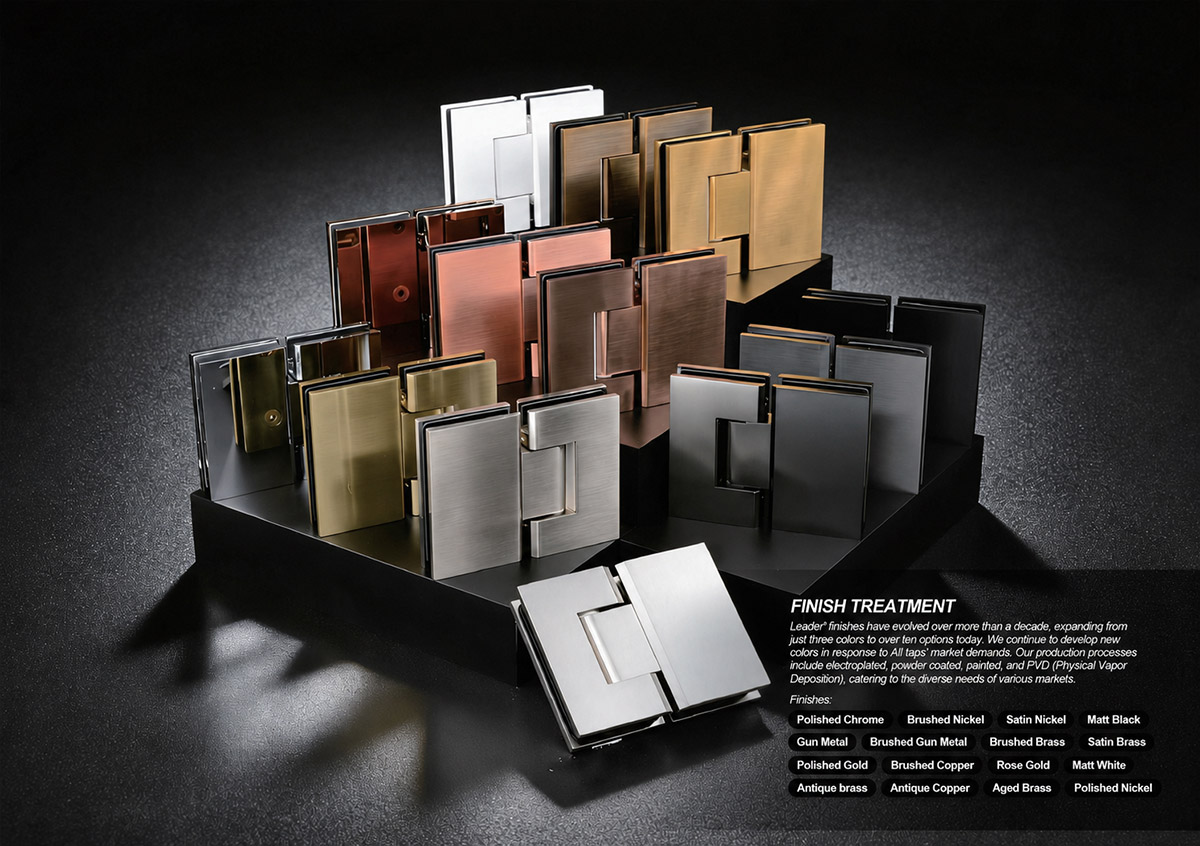
What are the main types of frameless shower hinges?
Choosing the correct hardware system depends on the specific layout of the bathroom and the weight of the glass panels. Below is a detailed breakdown of the primary shower door hinge configurations available on the market.
When should you choose a wall-to-glass hinge?
Wall-to-glass hinges feature one side mounted directly to a sturdy wall structure, while the other side securely grips the glass door panel. Because the wall anchors the entire weight of the door, this system provides excellent stability.
Choose wall-to-glass hinges if your project involves a simple corner enclosure or a single-door system where a solid wall is immediately adjacent to the opening. They typically support glass thicknesses between 8mm and 12mm. Manufacturers must ensure the wall substrate is strong enough to handle the dynamic load of a moving glass panel.
What is the difference in wall to glass hinge vs glass to glass hinge?
The primary distinction between a wall to glass hinge vs glass to glass hinge is the mounting anchor point. While wall-to-glass hinges anchor to a structural wall, glass-to-glass hinges connect a movable door directly to an adjacent fixed glass panel.
Glass-to-glass hinges are necessary if your goal is a completely frameless aesthetic without visible metal frames or wall channels. They often accommodate 135-degree or 180-degree angles, creating seamless glass enclosures. However, because the fixed glass panel bears the weight of the moving door, the fixed panel must be securely braced with a header or support bar to prevent structural failure.
Why use a pivot hinge shower door system?
A shower door pivot hinge mounts at the very top and bottom of the glass door, rather than along the vertical side edge. This design transfers the majority of the door's weight directly into the floor.
Choose a pivot hinge shower door configuration if you are working with particularly wide or heavy glass panels. By distributing the load more uniformly, pivot hinges reduce the stress placed on adjacent glass panels or walls. They are highly popular in luxury residential designs that feature oversized, floor-to-ceiling glass doors.
When are self closing hinge commercial applications best?
Self-closing hinges contain an internal mechanism that automatically pulls the door shut once it reaches a certain angle (usually around 15 to 25 degrees).
You should specify a self closing hinge commercial setup if you are supplying hardware for hotels, gyms, or public locker rooms. In high-traffic environments, users frequently forget to close doors completely. Self-closing mechanisms prevent water from leaking outside the shower enclosure, reducing slip hazards and maintenance requirements for the facility.

What are the benefits of continuous hinges?
Continuous hinges run along the entire vertical length of the glass door. Because they distribute the weight of the glass across a massive surface area, they offer unparalleled structural support.
Select continuous hinges if your clients are outfitting mid-to-high-end commercial spaces that experience heavy daily use. While they are slightly more visible than small patch fittings, their durability drastically reduces the likelihood of door sagging over time.
How do spring hinges control the door?
Spring hinges utilize a heavy-duty internal spring to manage the door's reset angle. These hinges allow the door to swing open smoothly and then return to a closed, centered position automatically. They are particularly useful in fast-paced commercial settings, but buyers must verify the spring tension rating matches the exact weight of the glass to prevent the door from slamming shut too aggressively.
When should you use positioning hinges?
Positioning hinges feature specialized internal detents that hold the shower door open at specific angles, such as 0°, 90°, or 135°.
Choose positioning hinges if the bathroom layout requires folding doors or if users need the door to stay propped open for ventilation and cleaning. This functionality significantly improves the user experience in tight spaces where a swinging door might otherwise hit a vanity or toilet.
How to adjust a glass shower door pivot hinge?
Over time, even the highest-quality hardware may require minor adjustments due to building settlement or heavy use. Adjusting a shower door pivot hinge is a straightforward process that maintenance teams can complete with basic hand tools.
First, locate the adjustment screws on the top and bottom pivot brackets. Support the weight of the glass door carefully, often using wooden shims underneath the bottom edge to prevent sudden drops. Loosen the set screws slightly using an Allen wrench. Shift the glass panel gently until it is perfectly plumb and aligns with the adjacent panels or magnetic seals. Once the door sits perfectly level, tighten the set screws firmly to lock the glass back into place. Always refer to the specific manufacturer guidelines, as torque specifications vary between hardware brands.
Advancing Your Hardware Sourcing Strategy
Procuring the correct shower hardware involves balancing aesthetics, safety, and long-term durability. By understanding the functional limits and ideal application scenarios for each hinge type, wholesalers can provide highly targeted recommendations to their downstream clients. Partnering with established suppliers like Leader Hardware ensures you receive precision-engineered components that meet strict international quality standards. Take the time to evaluate your upcoming project requirements against the load capacities and mounting styles detailed above.
Frequently Asked Questions
What glass thickness is required for most shower door hinges?
Most standard shower door hinges accommodate tempered glass thicknesses ranging from 8mm (5/16 inch) to 12mm (1/2 inch). Commercial projects utilizing oversized doors may require heavy-duty hinges designed for 15mm to 19mm glass.
How much weight can a standard shower door pivot hinge support?
A standard pivot hinge can typically support between 80 to 100 pounds per pair. Heavy-duty pivot hinges are available for larger doors, supporting upwards of 140 pounds, provided the floor and header anchors are structurally sound.
Are glass-to-glass hinges safe for heavy doors?
Yes, but they require strict installation protocols. Because the moving door's weight transfers to the stationary glass panel, the stationary panel must be firmly anchored to the floor and ceiling using structural brackets or a sturdy header rail.
How can wholesalers ensure quality when buying shower hardware?
Wholesalers should request product testing certifications from the manufacturer. Look for companies that conduct routine load testing, salt spray corrosion testing for finishes, and cycle testing to guarantee the hinge mechanism survives thousands of openings and closings.
Related News
-
 The main commercial glass hardware types include glass door hardware (such as shower door hinges and sliding door systems), partition accessories, railing components, and canopy fittings. Choose your hardware based on glass thickness (typically 8mm to 19mm), load-bearing capacity requirements, and s
 -
 Quick answer: The main shower door hinge types include wall-to-glass, glass-to-glass, pivot, self-closing, continuous, spring, and positioning hinges. Wholesalers and manufacturers should select hinges based on glass thickness (typically 8mm to 19mm), load-bearing capacity, and application requireme
 -
 Renovating a bathroom requires careful planning and a keen eye for detail. Every fixture you choose plays a significant role in the overall aesthetic and functionality of the space. Among the most impactful upgrades you can make is installing a glass shower door sliding system. This sleek addition i
Keep In Touch With Us
Ready to partner with a reliable manufacturer for your next project?
Our expert sales team is here to help.
Fill out the form below, and we will get back to you within 24 hours.
WhatsApp:+86-198 4916 4959
E-mail:info@leaderhardware.com
Tel:+86 750 366 8980


