


The main commercial glass hardware types include glass door hardware (such as shower door hinges and sliding door systems), partition accessories, railing components, and canopy fittings. Choose your hardware based on glass thickness (typically 8mm to 19mm), load-bearing capacity requirements, and specific application scenarios like hotel lobbies, shopping mall entrances, or office buildings.
Selecting the right commercial glass hardware dictates both the aesthetic appeal and the structural integrity of modern building projects. Architects and contractors must carefully match specific architectural glass fittings to the exact functional demands of a space. A poorly specified fitting can lead to mechanical failure, while the correct choice ensures decades of reliable performance.
Understanding the various commercial glass hardware types helps buyers at the awareness stage make informed decisions. Different environments demand different specifications. A busy shopping mall entrance requires heavy-duty load-bearing capabilities, whereas a luxury hotel bathroom prioritizes sleek finishes and smooth operation.
This guide breaks down the essential hardware categories. You will learn the applicable glass thickness ranges, load-bearing capacities, and typical application scenarios for each component. By the end of this article, you will know exactly which hardware suits your next commercial project.
What are the key glass door hardware components?
Glass doors serve as the primary interaction point for users entering a building or room. The hardware supporting these doors must withstand high traffic while maintaining a clean, frameless look. The most common glass door hardware components include hinges, clamps, handles, and sliding mechanisms.
When should you use a shower door hinge?
A shower door hinge connects a frameless glass door to a wall or another glass panel, allowing it to pivot open and closed. You should choose a heavy-duty shower door hinge if your project involves luxury hotel bathrooms or high-end residential complexes.
Glass thickness range: Typically designed for 8mm to 12mm tempered glass.
Load-bearing capacity: Standard brass or stainless steel hinges support 40 kg to 50 kg per pair.
Application scenarios: Hotel bathroom enclosures, gym shower facilities, and upscale residential bathrooms.
How do you select the right glass clamp?
A glass clamp secures stationary glass panels to floors, walls, or ceilings without the need for bulky frames. Select a glass clamp if you need to stabilize fixed panels in a shower enclosure or a small display case.
Glass thickness range: Usually accommodates 6mm to 12mm glass.
Load-bearing capacity: Clamps primarily prevent lateral movement rather than bearing vertical weight, but they safely support static panels weighing up to 45 kg when properly spaced.
Application scenarios: Securing fixed panels in commercial restrooms, retail display cases, and office partitions.
Where is a pull handle&towel bar best applied?
A pull handle&towel bar combination offers dual functionality, providing a gripping surface on the outside of a door and a place to hang towels on the inside. Choose this hardware if space efficiency and user convenience are top priorities.
Glass thickness range: Compatible with 8mm to 12mm glass.
Load-bearing capacity: Designed to withstand standard pulling forces of up to 100 kg of pull tension.
Application scenarios: Hospitality sector bathrooms, spa facilities, and residential shower doors.
What makes a sliding door system ideal for commercial spaces?
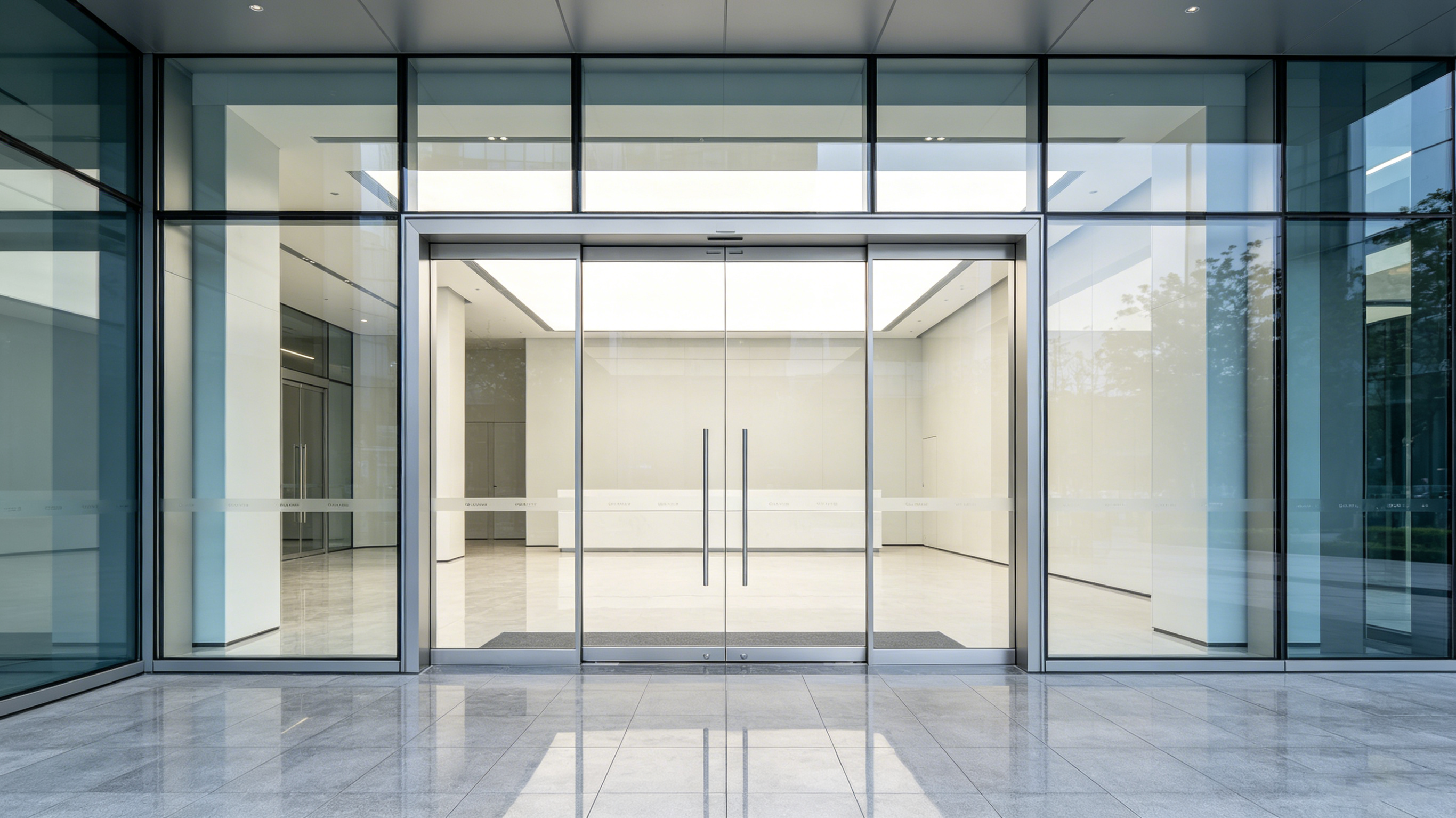
A sliding door system utilizes tracks and rollers to move glass doors parallel to the wall, saving valuable floor space. Opt for a sliding door system if your project has tight spatial constraints or requires a modern, minimalist entrance.
Glass thickness range: Generally supports 8mm to 12mm glass.
Load-bearing capacity: Commercial-grade sliding rollers can support heavy doors weighing between 80 kg and 120 kg.
Application scenarios: Conference room entrances, boutique storefronts, and interior hotel room dividers.
What accessories are needed for a glass partition system?
Glass partition systems create distinct rooms within a larger open floor plan while allowing natural light to flow through the building. The hardware required for these systems includes patch fittings, U-channels, and pivot hinges.
Patch fittings act as the primary structural connectors at the corners of heavy glass panels.
Glass thickness range: Typically robust enough for 10mm to 15mm tempered glass.
Load-bearing capacity: Heavy-duty patch fittings support doors and panels up to 100 kg.
Application scenarios: Office building partitions, automobile showroom dividers, and airport lounge enclosures.
Choose U-channels for continuous floor and ceiling support if you want a seamless look with minimal visible metal. This approach works exceptionally well in corporate environments where soundproofing and privacy are necessary.
How do you choose the right glass railing hardware?
Glass railing systems provide safety on elevated surfaces without obstructing the view. The primary glass railing hardware includes base shoes, spigots, and standoffs.
Base shoe systems use a continuous metal channel at the floor level to grip the glass panel.
Glass thickness range: Requires thicker laminated or tempered glass, usually 12mm to 21.52mm.
Load-bearing capacity: Engineered to withstand significant lateral wind loads and human impact, often rated for 1.5 kN to 3.0 kN per meter.
Application scenarios: Shopping mall balconies, stadium viewing areas, and high-rise hotel lobby stairs.
Choose stainless steel spigots if you prefer a "floating glass" appearance around swimming pools or outdoor terraces. Spigots clamp the bottom edge of the glass, elevating it slightly off the ground to allow water drainage.
What fittings work best for curtain walls and canopies?
Curtain walls and glass canopies form the exterior envelope of a building. These structures endure severe weather conditions, requiring highly specialized architectural glass fittings like spider fittings and tension rods.
Spider fittings feature multiple arms that connect glass panels to a structural framework using articulated routels.
Glass thickness range: Handles heavy, multi-layered insulated or laminated glass from 12mm to 25mm.
Load-bearing capacity: Capable of supporting hundreds of kilograms per panel, distributing dead loads and wind pressure safely back to the building structure.
Application scenarios: Skyscraper facades, museum entrances, and large transit hubs.
Use tension rod systems for exterior glass canopies. These rods anchor the glass roof back to the building facade, providing overhead weather protection while maintaining a transparent aesthetic.
How to finalize your architectural glass hardware selection
Choosing the correct hardware goes beyond picking an appealing finish. You must evaluate the specific glass thickness, calculate the precise load-bearing requirements, and understand the environmental conditions of your application scenario. Sourcing components from an established commercial hardware manufacturer ensures your project meets international safety standards.
Companies like LEADER Hardware provide complete building hardware systems, producing up to 300,000 door hinges and 100,000 shower hinges monthly. Review your project blueprints, consult with structural engineers, and partner with a manufacturer that offers precision-engineered solutions tailored to your commercial needs.
Frequently Asked Questions (FAQ)
How much does commercial glass hardware typically cost?
The cost of commercial glass hardware varies significantly based on material quality and load capacity. Standard brass shower hinges may cost between $15 and $30 per pair, while heavy-duty stainless steel spider fittings for curtain walls can exceed $100 per unit. Always request custom quotes for large commercial orders.
How long does it take to manufacture and deliver custom architectural glass fittings?
For standard hardware like a glass clamp or pull handle, delivery usually takes 2 to 4 weeks. Custom OEM/ODM hardware solutions or large-scale sliding door system orders may require 6 to 8 weeks for engineering, production, and international shipping.
What are the risks of using the wrong glass thickness for hardware?
Using glass that is too thin for a specific hardware component leads to loose fittings, slipping panels, and eventual shattering. Using glass that is too thick exceeds the hardware's load-bearing capacity, which can cause the hinges or tracks to warp, fail, and drop the glass panel.
Are there alternatives to stainless steel for glass railing hardware?
Yes. While 304 or 316-grade stainless steel is the industry standard for durability, aluminum is a lighter and often more cost-effective alternative for base shoe railings. Choose aluminum if budget is a primary concern and the environment is not highly corrosive.
Who is LEADER Hardware best suited for?
LEADER Hardware is best suited for architects, commercial contractors, and wholesale distributors who require high-volume, precision-engineered architectural glass fittings. They are an ideal partner if you need reliable OEM/ODM capabilities for large-scale projects like hotels, malls, and office buildings.
Related News
-
 The main commercial glass hardware types include glass door hardware (such as shower door hinges and sliding door systems), partition accessories, railing components, and canopy fittings. Choose your hardware based on glass thickness (typically 8mm to 19mm), load-bearing capacity requirements, and s
 -
 Renovating a bathroom requires careful planning and a keen eye for detail. Every fixture you choose plays a significant role in the overall aesthetic and functionality of the space. Among the most impactful upgrades you can make is installing a glass shower door sliding system. This sleek addition i
 -
 Frameless glass installations have completely changed modern architecture. From sleek shower enclosures to elegant office partitions, glass panels create open, light-filled spaces that feel both luxurious and inviting. But behind every beautiful glass installation is a crucial hardware component wor
Keep In Touch With Us
Ready to partner with a reliable manufacturer for your next project?
Our expert sales team is here to help.
Fill out the form below, and we will get back to you within 24 hours.
WhatsApp:+86-198 4916 4959
E-mail:info@leaderhardware.com
Tel:+86 750 366 8980


