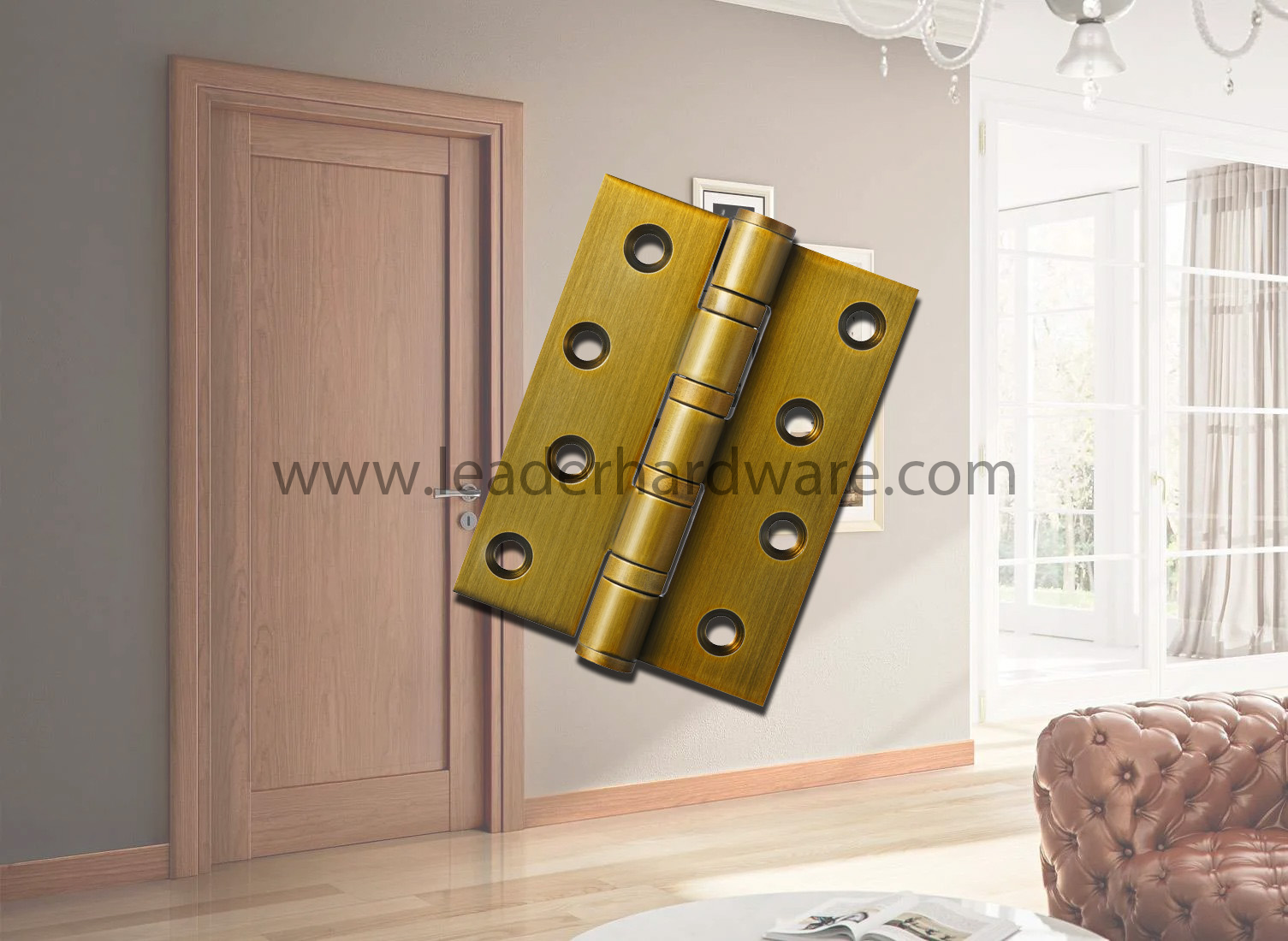
In short: Choose a brass hinge for heritage-style doors, luxury interiors, and low-moisture environments where warm, decorative tones matter most. Choose a stainless steel hinge for humid, coastal, or high-traffic commercial settings where corrosion resistance and load-bearing strength are the priority. The right choice ultimately comes down to your door's environment, load requirements, and desired finish.
Brass and stainless steel are the two most common metals used in door hinges, but they serve different needs. Below, we break down how each performs, where each excels, and how to decide between them for residential, commercial, or marine applications.

What Is a Brass Hinge Best Used For?
Brass hinges are best suited for interior doors where aesthetics and classic style matter as much as function. According to Leader Hardware, brass hinges combine classic beauty with reliable function. Their golden tone, machined knuckles, and tarnish-resistant properties make them a favorite for heritage-style doors, luxury hotels, and decorative interiors.
Key characteristics of brass door hinges include:
A warm, golden finish that suits traditional and luxury interior design
Machined knuckles for smooth, precise operation
Natural tarnish resistance, which helps maintain appearance over time in dry, indoor environments
A wide range of finishes, including brushed, antique, and unlacquered brass door hinges
Brass hinges are commonly specified for timber and wooden doors in hotels, heritage restorations, and high-end residential interiors, where the goal is to combine everyday function with decorative appeal.
What Is a Stainless Steel Hinge Best Used For?
Stainless steel hinges are best suited for environments exposed to moisture, weather, or heavy daily use. As Leader Hardware notes on its S/S Hinge page, stainless steel (S/S) hinges deliver unmatched corrosion resistance and modern appeal. Perfect for humid environments, they feature welded pins, satin finishes, and high load-bearing performance for commercial and marine use.
Key characteristics of stainless steel hinges include:
Superior corrosion resistance, making them ideal for bathrooms, coastal properties, and outdoor applications
Welded pins for added structural strength and durability
Satin or brushed finishes that suit modern, minimalist design
High load-bearing capacity, well-suited to commercial doors and heavier timber doors
Because of their resilience, stainless steel hinges (including 304 and 316 stainless steel grades) are frequently used in commercial buildings, marine settings, and any application where humidity or frequent use would compromise a less durable material.
Brass Hinge vs Stainless Steel Hinge: Key Differences
The decision between a brass hinge and a stainless steel hinge generally comes down to three factors: environment, load, and design intent.
Stainless steel hinges are better suited for humid, coastal, or bathroom environments, while brass hinges perform best in dry, indoor settings.
Brass hinges suit heritage, traditional, or luxury interiors with their golden tone, while stainless steel hinges suit modern, minimalist, or commercial spaces with a satin or brushed finish.
Stainless steel hinges, particularly those with welded pins, typically offer higher load-bearing performance for heavier doors and high-traffic commercial use.
Brass hinges are common on interior timber and wooden doors; stainless steel hinges are common on commercial glass doors, marine doors, and moisture-prone entries.
In practical terms: a brass hinge is better suited for a hotel suite door or a heritage home renovation, while a stainless steel hinge works best when the hinge will face moisture, heavy use, or outdoor exposure.